Threatened & Endangered Species Surveys & ESA Compliance
Projects that may affect federally or state-protected species carry real regulatory weight. Under the Endangered Species Act and parallel state laws, the presence of a listed species can shape — or stop — a project, and demonstrating compliance requires defensible survey data from qualified professionals.
Volant EcoServices conducts threatened and endangered species surveys to support ESA Section 7 consultation, Section 10 permitting, NEPA review, and state-level regulatory compliance. Our deepest specialization is in protected bat surveys, but our team's expertise in field ecology, survey design, and agency coordination extends to a broader range of listed wildlife across the eastern United States.
Our Specialty: Threatened & Endangered Bat Surveys
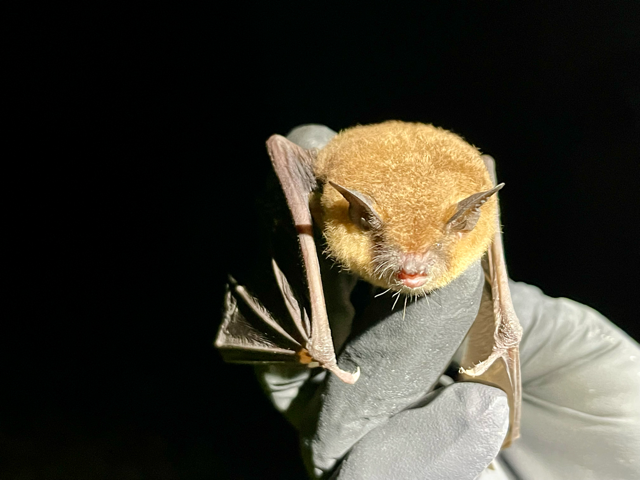
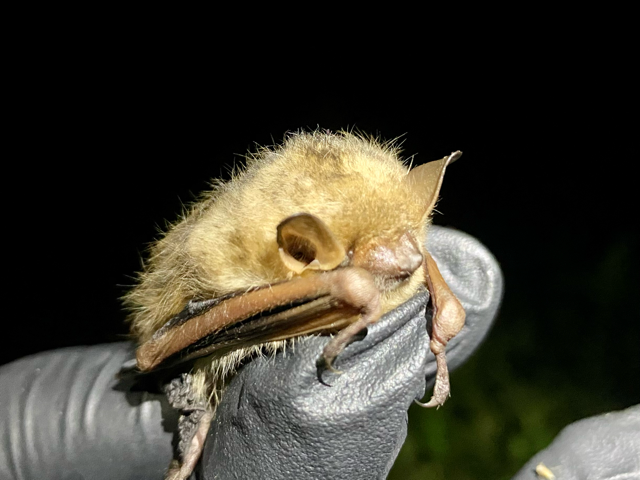
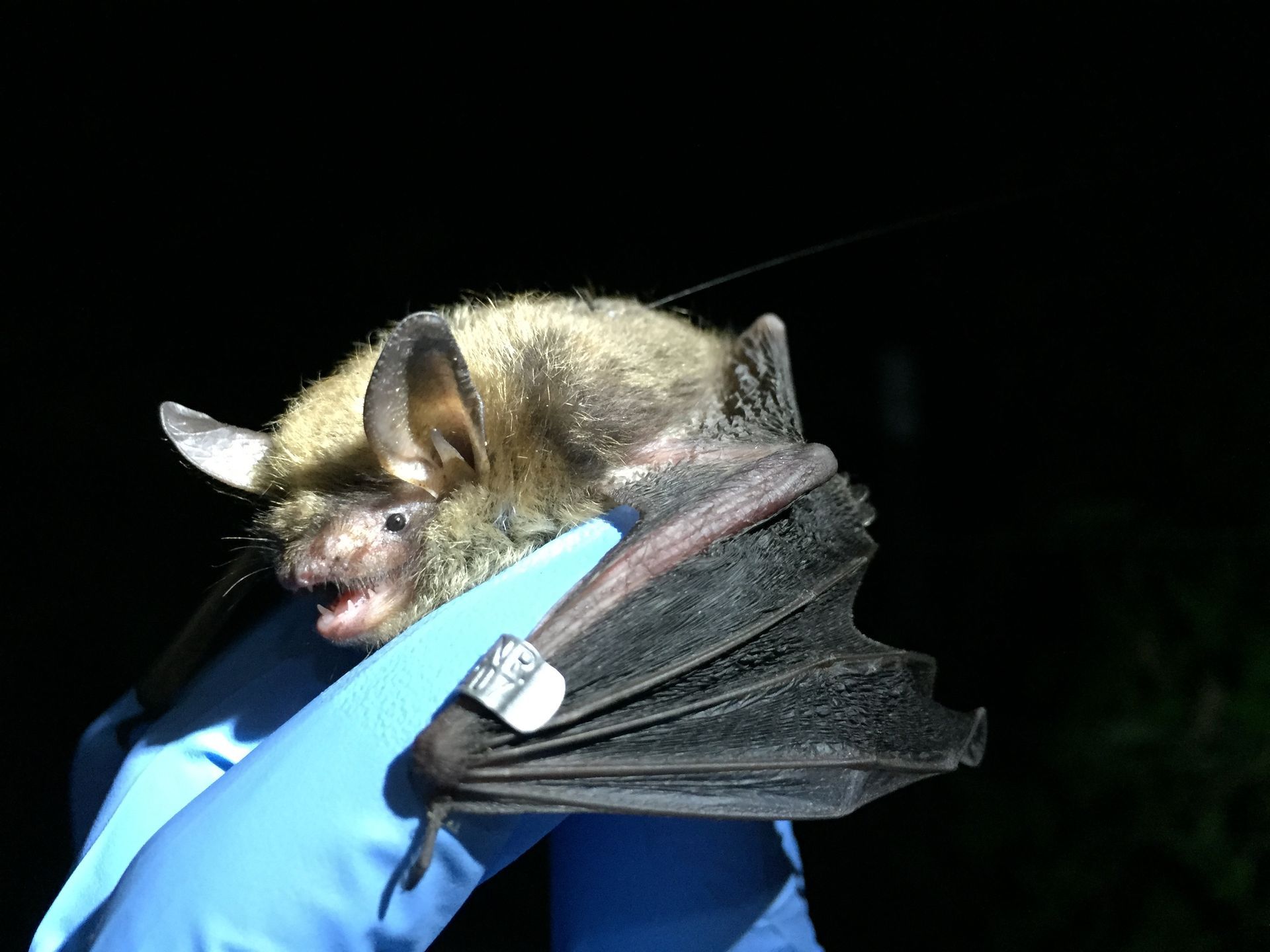
Bats are the core of Volant's practice. Both of our principal ecologists hold active USFWS Section 10(a)(1)(A) recovery permits, and we conduct presence/probable absence surveys, habitat assessments, and acoustic and mist-net surveys for federally listed bats — including the Indiana bat, northern long-eared bat, and tricolored bat — following the most current USFWS Range-wide Survey Guidelines.
Where a state requires additional target species in survey design — for example, state-listed species such as the little brown bat (Myotis lucifugus) — we incorporate those requirements into the survey approach in coordination with the appropriate agencies.
Explore our bat survey services: Bat Surveys · Potential Bat Hibernaculum Surveys · Bridge & Culvert Bat Surveys · Bat Acoustic Data Vetting
Beyond Bats: Broader Listed-Species Capabilities
Formal and Informal Section 7 Consultation
Section 7 of the Endangered Species Act requires federal agencies to consult with the U.S. Fish and Wildlife Service to ensure that federally funded or permitted projects do not jeopardize listed species or adversely modify designated critical habitat. For many of our clients — including transportation agencies, utilities, developers, and Department of Defense installations — Section 7 consultation is the central regulatory process driving their species survey requirements.
Volant supports both formal and informal Section 7 consultations across a broad range of listed species and project types. Our team prepares Biological Assessments (BAs) documenting survey results, habitat conditions, and potential project impacts for listed bat species including the Indiana bat, northern long-eared bat, and tricolored bat, as well as listed birds, reptiles, amphibians, and other sensitive taxa. We coordinate directly with USFWS Field Offices throughout the consultation process, working proactively to resolve potential concerns, minimize project delays, and achieve outcomes that satisfy both regulatory requirements and client timelines. Where Biological Opinions are issued, we assist clients in understanding and implementing the terms and conditions required for ESA compliance.
Presence/Probable Absence Surveys
Presence/probable absence (P/PA) surveys are the primary tool for determining whether federally listed species occur within or near a project area. These surveys follow standardized USFWS protocols and are designed to provide defensible, agency-acceptable documentation of species presence or absence — information that directly informs whether Section 7 consultation, permit conditions, or project modifications are required. Volant conducts P/PA surveys for a wide range of threatened and endangered species with particular depth of expertise in listed bat species.
Breeding Bird Surveys
Many federally and state-listed bird species have specific survey requirements tied to their breeding season, when detection probability is highest and regulatory protections are most stringent. Breeding bird surveys document the presence, distribution, and relative abundance of bird species within a project area and are often required to support NEPA review, Section 7 consultation, and state-level natural heritage assessments.
Volant conducts breeding bird surveys using standardized point count and transect methodologies appropriate to the project setting and target species. Our biologists are experienced with listed and sensitive bird species across the eastern United States, including neotropical migrants, area-sensitive forest interior species, and grassland birds. Survey results are compiled into detailed reports suitable for agency review and environmental documentation.
Baseline Species Inventories
Baseline species inventories provide a comprehensive picture of the plant and animal communities present within a project area or region of interest. These inventories establish the ecological context for environmental review, identify sensitive or listed species that may require further assessment, and generate the foundational data needed for conservation planning, land management decisions, and long-term monitoring programs.
Volant conducts baseline species inventories using standardized field methods across a broad range of taxa, including mammals, birds, amphibians, reptiles, and select plant and invertebrate species. Our inventories are designed to meet the documentation standards required by USFWS, state wildlife agencies, and other reviewing entities. Whether supporting a single-site development project or a large-scale landscape assessment, our team delivers thorough, well-documented results that give clients and agencies confidence in the biological data underpinning their decisions.
Raptor Migration Surveys
Raptor migration surveys are typically required for wind energy projects, communication towers, and other tall structures proposed in areas with significant raptor movement corridors. These surveys document the species composition, timing, and intensity of raptor migration through a project area and are used to assess collision risk and inform turbine siting, operational protocols, and mitigation measures.
Volant conducts raptor migration surveys following standardized watchpoint protocols, documenting species, flight behavior, altitude, and weather conditions throughout the migration season. Our survey results provide the data needed to satisfy agency requirements, support environmental review, and demonstrate due diligence in assessing raptor collision risk. We work with wind energy developers, environmental consultants, and agency partners to design survey programs that are appropriately scaled to project size, location, and regulatory context.
Reptile, Amphibian, and Turtle Surveys
Reptiles, amphibians, and freshwater turtles include numerous federally and state-listed species across the eastern United States, and survey requirements for these taxa are increasingly common components of environmental review for projects near wetlands, streams, forest edges, and other sensitive habitats. Detection of listed species such as the eastern hellbender, bog turtle, wood turtle, or state-listed salamanders can significantly influence project siting, design, and permitting outcomes.
Volant conducts targeted reptile, amphibian, and turtle surveys using species-appropriate methods including coverboard arrays, aquatic sampling, visual encounter surveys, and call surveys for anuran species. Our biologists are familiar with the habitat associations, seasonal activity patterns, and detection methods for listed and sensitive herpetofauna across Ohio, Pennsylvania, Kentucky, West Virginia, Indiana, Virginia, and neighboring states. Survey programs are designed to meet current agency guidance and produce defensible results suitable for ESA compliance and state-level natural heritage review.
Vegetation Surveys
Vegetation surveys document plant community composition, structure, and condition within a project area and are often required to characterize habitat quality for listed species, support wetland delineations, assess potential impacts to federally listed plant species, and inform conservation and restoration planning. For projects affecting forested habitats, shrublands, grasslands, or wetland communities, a thorough vegetation assessment provides critical context for understanding how proposed activities may affect sensitive species and ecological functions.
Volant conducts vegetation surveys using standard phytosociological methods, including relevé plots, transects, and cover class estimates, to characterize plant communities and identify species of regulatory concern. Our botanists and ecologists are familiar with the flora of the eastern United States and experienced in recognizing the habitat features that support listed bat species, birds, and other wildlife. Vegetation survey results are integrated with our broader biological assessments to provide clients and agencies with a complete, ecologically grounded picture of project site conditions.
If your project involves a protected species — bat or otherwise — we can help you determine survey requirements and a path to compliance.
Related: Bat Surveys · Biological Assessments · Environmental Assessments & Permitting · Industries We Serve