
Bat Hibernacula and Acoustic Surveys at Shaker Village of Pleasant Hill, Kentucky
Shaker Village of Pleasant Hill in Mercer County, Kentucky is one of the most significant bat conservation properties in Volant EcoServices' long-term monitoring portfolio. Since 2019, our team has conducted biennial mist-net surveys at the site to document bat species diversity and track population trends — work that has confirmed consistent use of the property by the federally endangered gray bat (Myotis grisescens) across multiple survey years.
In 2026, Volant expanded the scope of bat survey work at Shaker Village beyond the established mist-net program to include a comprehensive assessment of the site's karst features — historic mine openings and natural caves distributed across the property that had not previously been evaluated for bat use. That assessment revealed something our mist-net surveys alone had never documented: the presence of the tricolored bat (Perimyotis subflavus) at the site, and a previously uncharacterized network of subsurface features with significant potential to provide both winter hibernaculum habitat and summer maternity roost habitat for multiple bat species.
Background: Karst Features at Shaker Village
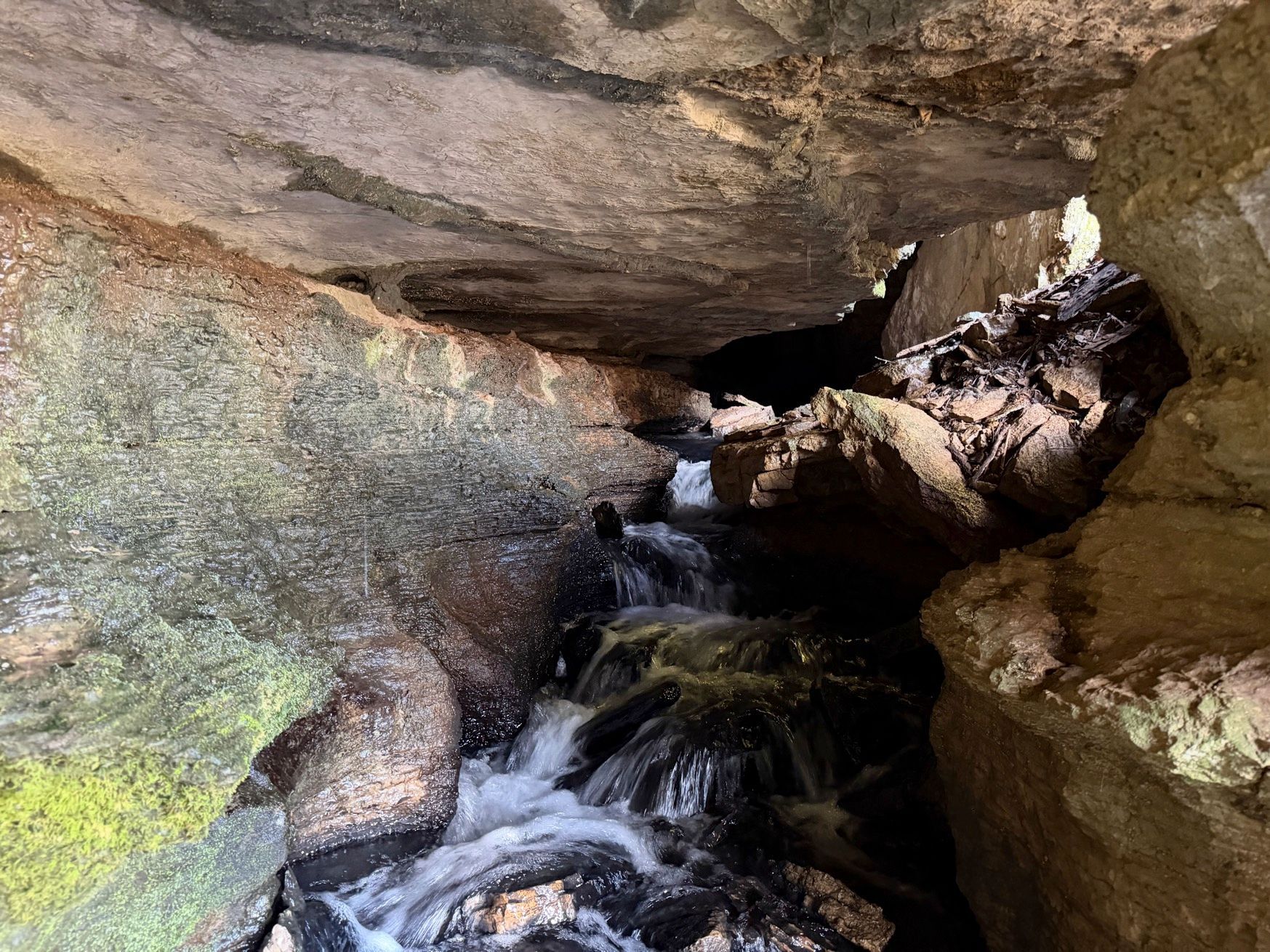
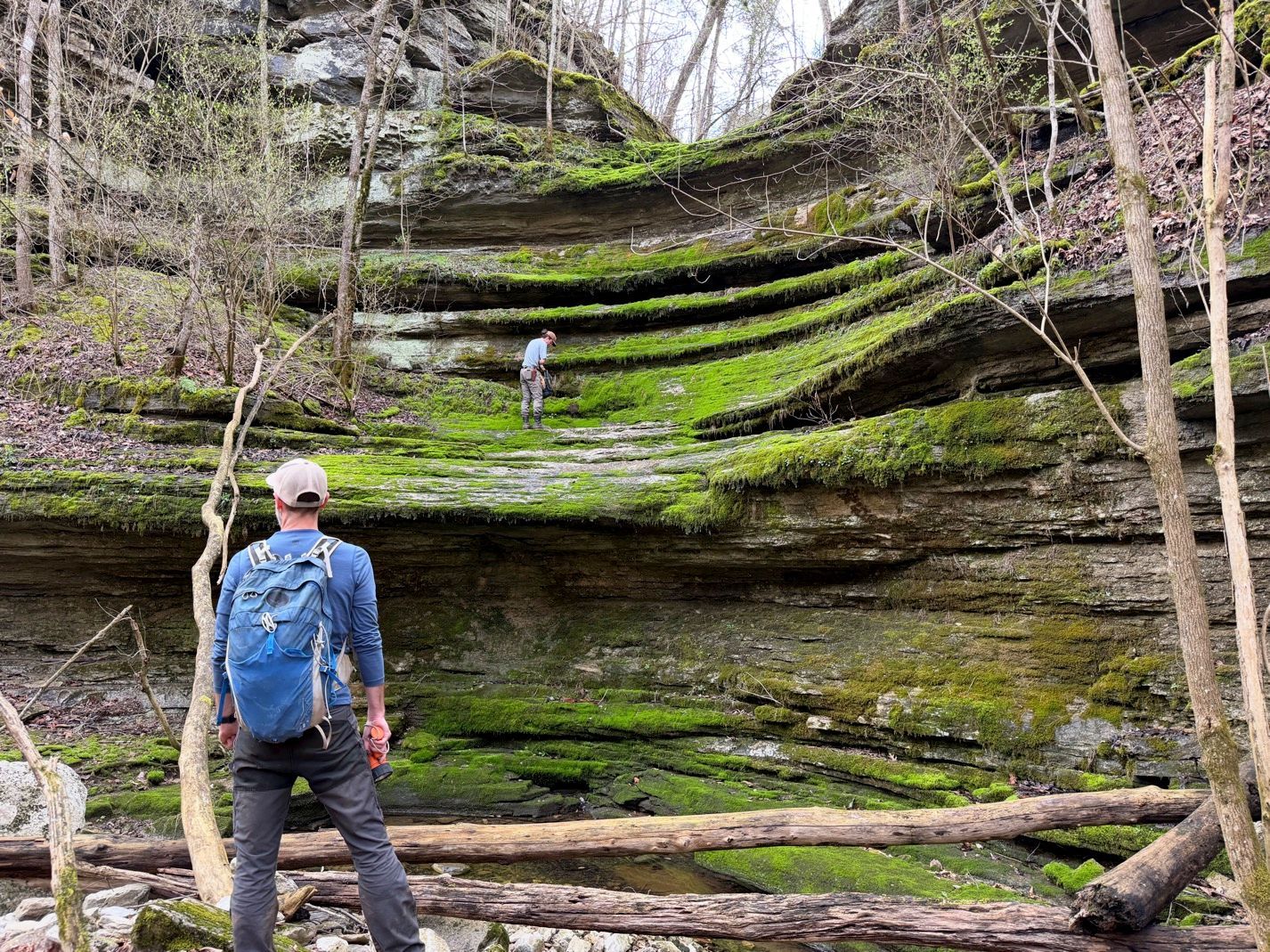
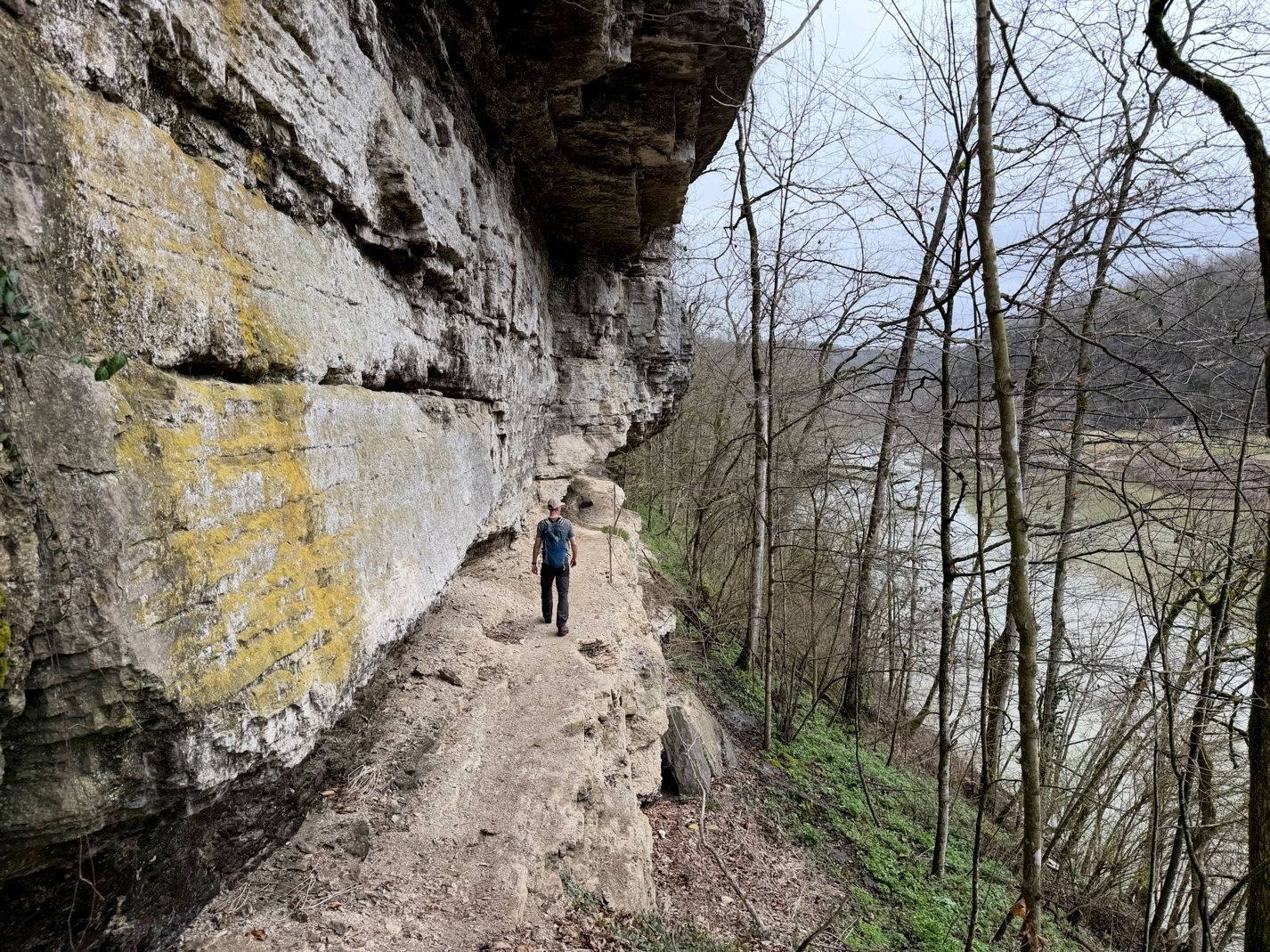
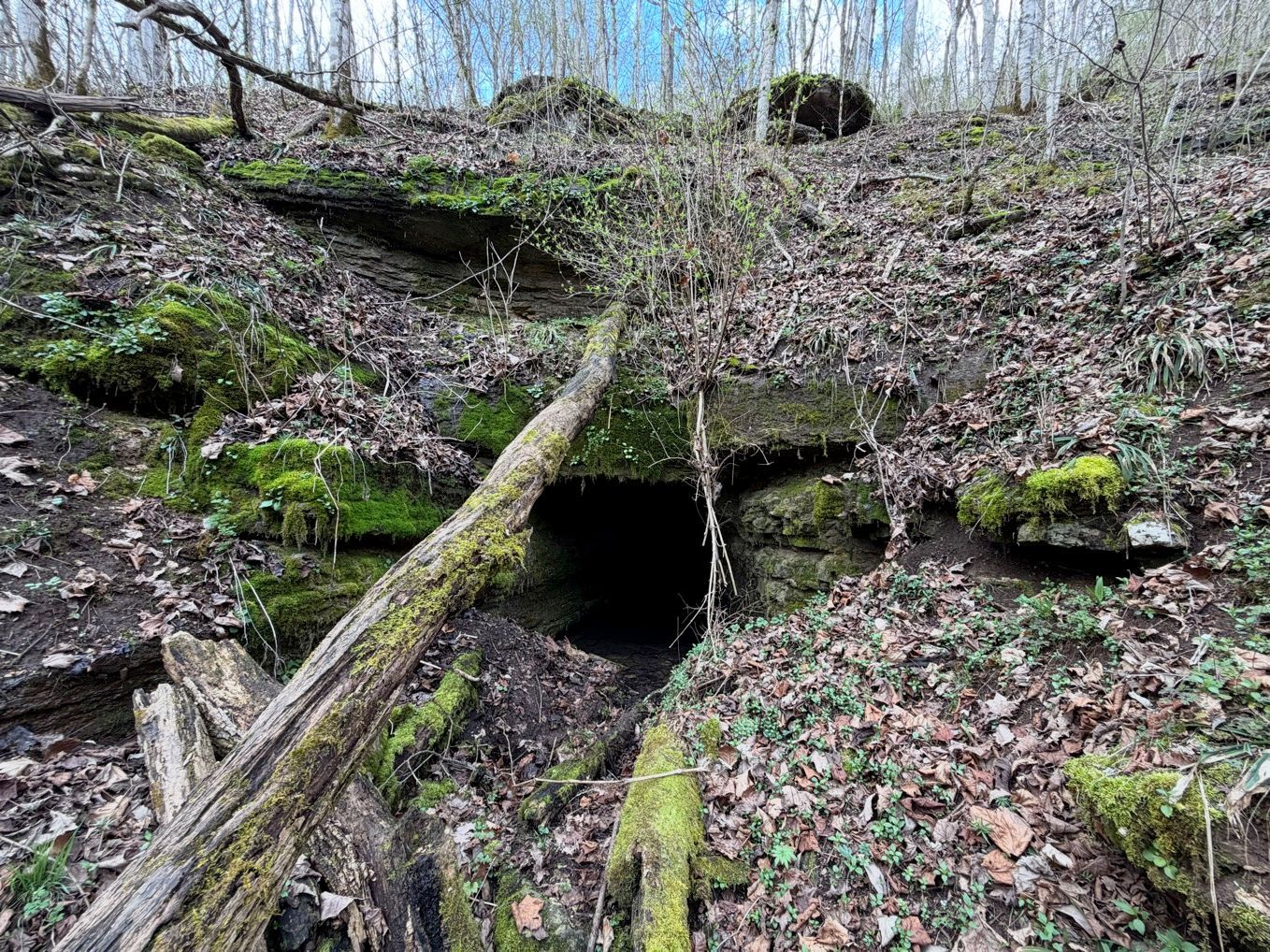
The karst landscape at Shaker Village of Pleasant Hill includes a combination of abandoned historic mine openings and natural cave entrances — features characteristic of the limestone-dominated geology of central Kentucky. These subsurface structures, while historically known at the site, had not been systematically evaluated for bat use or assessed against USFWS criteria for potential hibernacula and summer roost habitat.
Volant conducted a systematic field survey of these karst features to document their location, physical characteristics, and suitability as bat habitat. Features were evaluated for temperature, humidity, airflow, structural stability, and accessibility — the key environmental conditions that determine whether a cave or mine can support hibernating bats during winter and maternity colonies during summer. All assessment work followed USFWS Range-wide Indiana Bat and Northern Long-Eared Bat Survey Guidelines protocols for potential hibernaculum habitat assessment.
A Significant Discovery: Tricolored Bat Documented in a Natural Cave
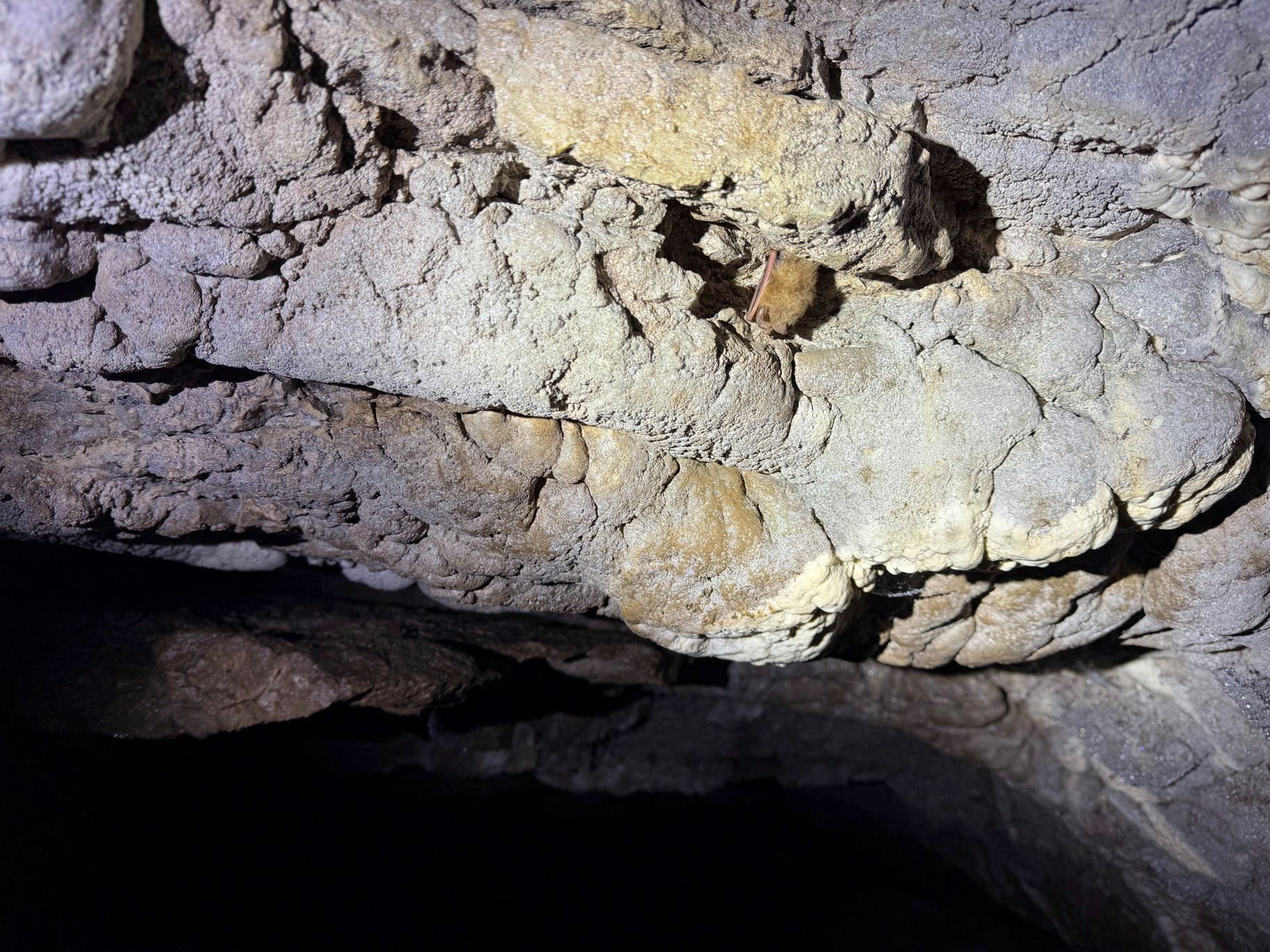
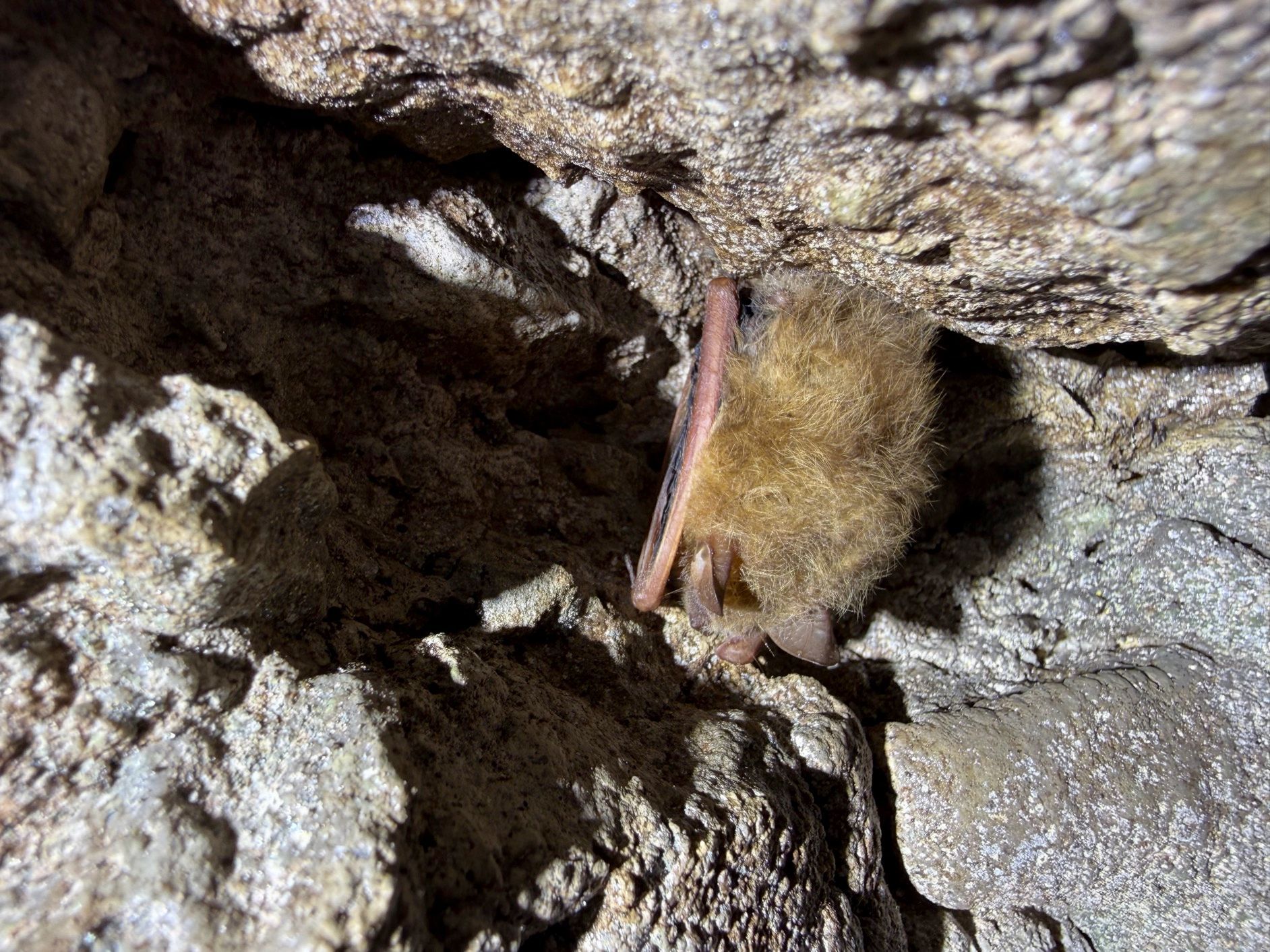
During the field survey of karst features, Volant biologists documented two tricolored bats roosting inside one of the natural caves at the site. This discovery carries particular significance in the context of Volant's long-term monitoring history at Shaker Village.
Despite six years of biennial mist-net surveys conducted along forested corridors and stream habitats across the property — surveys specifically designed to detect bat species using the site — the tricolored bat had never once been captured. This finding underscores one of the most important lessons in comprehensive bat survey design: no single survey method tells the whole story. Mist-net surveys, acoustic monitoring, hibernaculum assessments, and karst feature surveys each capture different aspects of bat community use at a site. A species that appears absent under one methodology may be actively using the site in ways that only a different approach can reveal.
Ongoing Acoustic Monitoring — Spring Emergence and Summer Activity
To determine how the documented karst features are being used by bats across seasons, Volant is conducting a multi-season acoustic monitoring program at Shaker Village that is currently underway.
Spring Emergence Surveys — Acoustic detectors were deployed at cave and mine entrances during the spring emergence window to document bat activity as individuals exit potential hibernacula following winter hibernation. These surveys are designed to determine whether the karst features at Shaker Village are functioning as active hibernacula for gray bat, tricolored bat, or other species — and to assess the relative significance of individual features based on activity levels and species composition.
Summer Acoustic Monitoring — Acoustic detectors are also being deployed at and around the karst features during the summer active season to document which bat species are using the caves and mine openings for day roosting, maternity colony activities, and nighttime foraging. Summer acoustic data will be analyzed alongside mist-net survey results from the ongoing biennial program to build the most complete picture yet of bat community use across the full range of habitats at Shaker Village.
All acoustic data collected during this monitoring program is being analyzed using USFWS-approved software and manually vetted by Volant's federally permitted biologists — consistent with the acoustic data vetting standards we apply to all survey work. Results will be compiled into a comprehensive survey report documenting bat use of karst features at the site and providing recommendations for long-term conservation management.
Acoustic monitoring is ongoing. Results will be updated as survey data becomes available.
Why This Work Matters
The expanding scope of bat survey work at Shaker Village of Pleasant Hill reflects the kind of multi-method, long-term approach that produces genuinely meaningful conservation data. Each survey component — mist-netting, karst feature assessment, acoustic monitoring — contributes a piece of the picture that the others cannot provide alone.
The documentation of tricolored bat at the site through cave assessment is particularly timely given the species' proposed federal listing as endangered. As conservation managers and land stewards across the eastern United States grapple with the implications of the tricolored bat's proposed listing, long-term monitoring data from properties like Shaker Village will be increasingly valuable in understanding where the species occurs, what habitats it depends on, and what conservation measures are most effective.
For Shaker Village of Pleasant Hill — a historic preservation and conservation property with a deep commitment to ecological stewardship — this work supports informed land management decisions grounded in the best available scientific data. For Volant EcoServices, it is a demonstration of what comprehensive, multi-season bat survey programs can reveal that more limited approaches would miss.
Interested in a comprehensive bat survey program for your conservation property, land trust, or managed landscape — including karst feature assessments, hibernaculum surveys, and long-term acoustic monitoring? Contact Volant EcoServices to discuss a survey program tailored to your site's habitats and conservation goals across Kentucky, Ohio, and the eastern United States.