Science in Motion.
Bat Surveys & Ecological Consulting Services
Volant EcoServices, LLC is a woman-owned environmental consulting firm specializing in bat surveys and bat acoustic monitoring for regulatory compliance. We conduct presence/probable absence surveys for federally listed species including the Indiana bat (Myotis sodalis), northern long-eared bat (Myotis septentrionalis), and tricolored bat (Perimyotis subflavus), supporting Section 7 consultation, ESA permitting, and NEPA compliance across Ohio, Pennsylvania, Kentucky, West Virginia, Indiana, and the broader eastern United States.
We work with government agencies, private developers, electric utilities, wind energy companies, and transportation contractors to deliver science-based results that keep projects compliant and moving forward.
Our clients include:
- Oil and Gas Industry
- Department of Defense
- State DOTs
- USDOT Federal Highway Administration
- Electric Utility Companies
- Wind Energy Companies
- Non-profit Environmental Organizations
- Real Estate Developers
"We take pride in delivering high-quality environmental consulting services that align with our clients' needs, regulatory requirements, and conservation goals. Our dedication to client collaboration and environmental stewardship ensures that each project contributes to a more sustainable future."
FAQs
Do I need a bat survey for Indiana bat, northern long-eared bat, or tricolored bat?
If your project has the potential to impact suitable habitat for federally listed bat species, bat surveys may be required as part of ESA Section 7 consultation or state-level permitting. The Indiana bat (Myotis sodalis) and northern long-eared bat (Myotis septentrionalis) are federally listed under the Endangered Species Act. The tricolored bat (Perimyotis subflavus) is currently proposed as federally endangered. All three species are found across much of the eastern United States.
Survey requirements are typically triggered when a project involves tree clearing, structure demolition, cave or mine disturbance, or other activities near suitable foraging or roosting habitat during the active season or near hibernacula.
Volant EcoServices conducts presence/probable absence surveys for all three species following the most current USFWS bat survey guidelines, including mist-netting, acoustic monitoring, and habitat assessments. Contact us to discuss whether your project may require bat surveys.
What to Expect During a Mist-Net Survey for Rare Bats
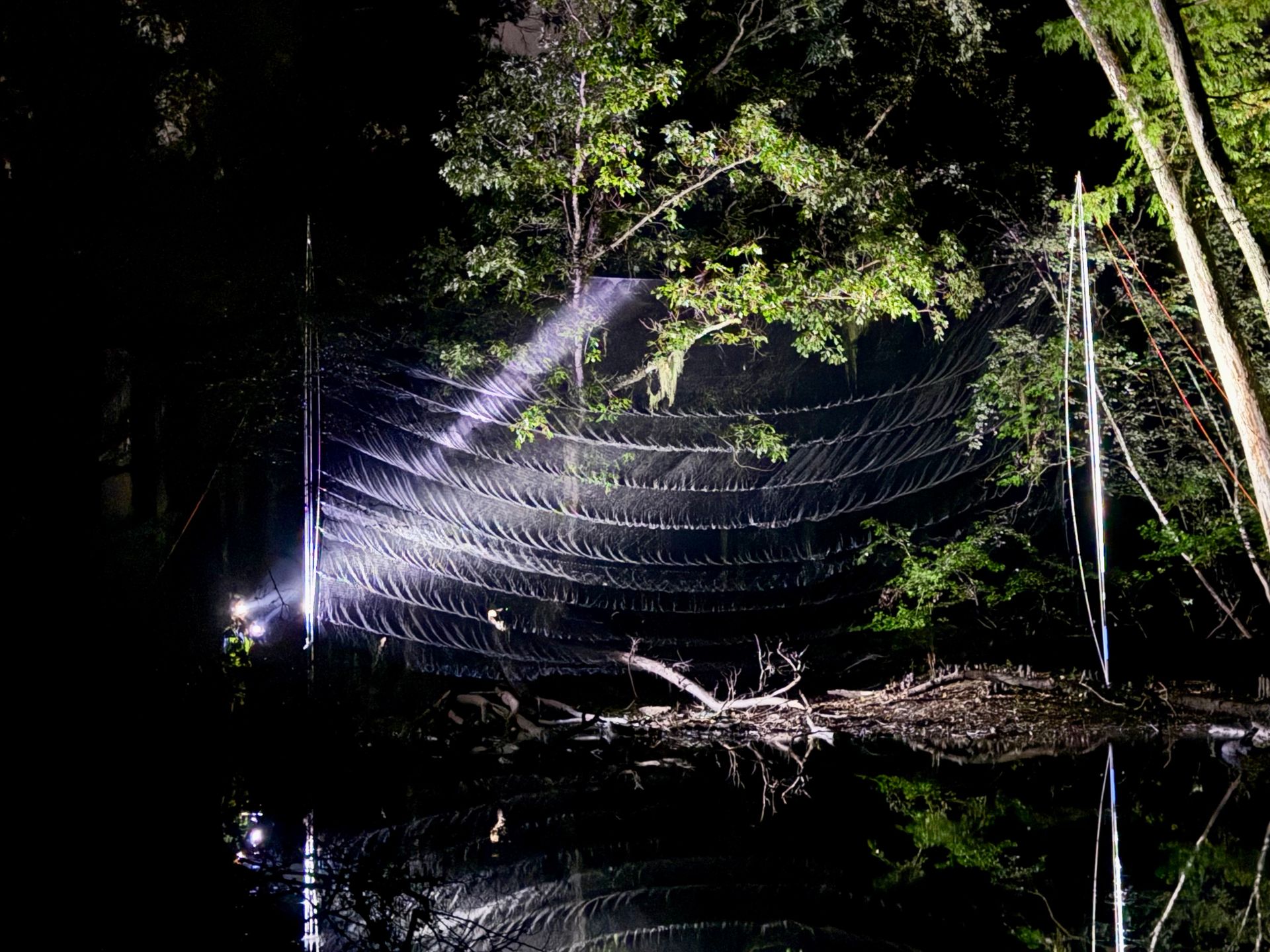
Mist net surveys are one of the most effective methods for determining the presence or probable absence of rare bat species when projects may impact suitable habitat. At Volant EcoServices, we conduct mist net surveys following the most recent U.S. Fish and Wildlife Service (USFWS) bat survey guidelines, ensuring that all work aligns with current federal and state regulatory standards.
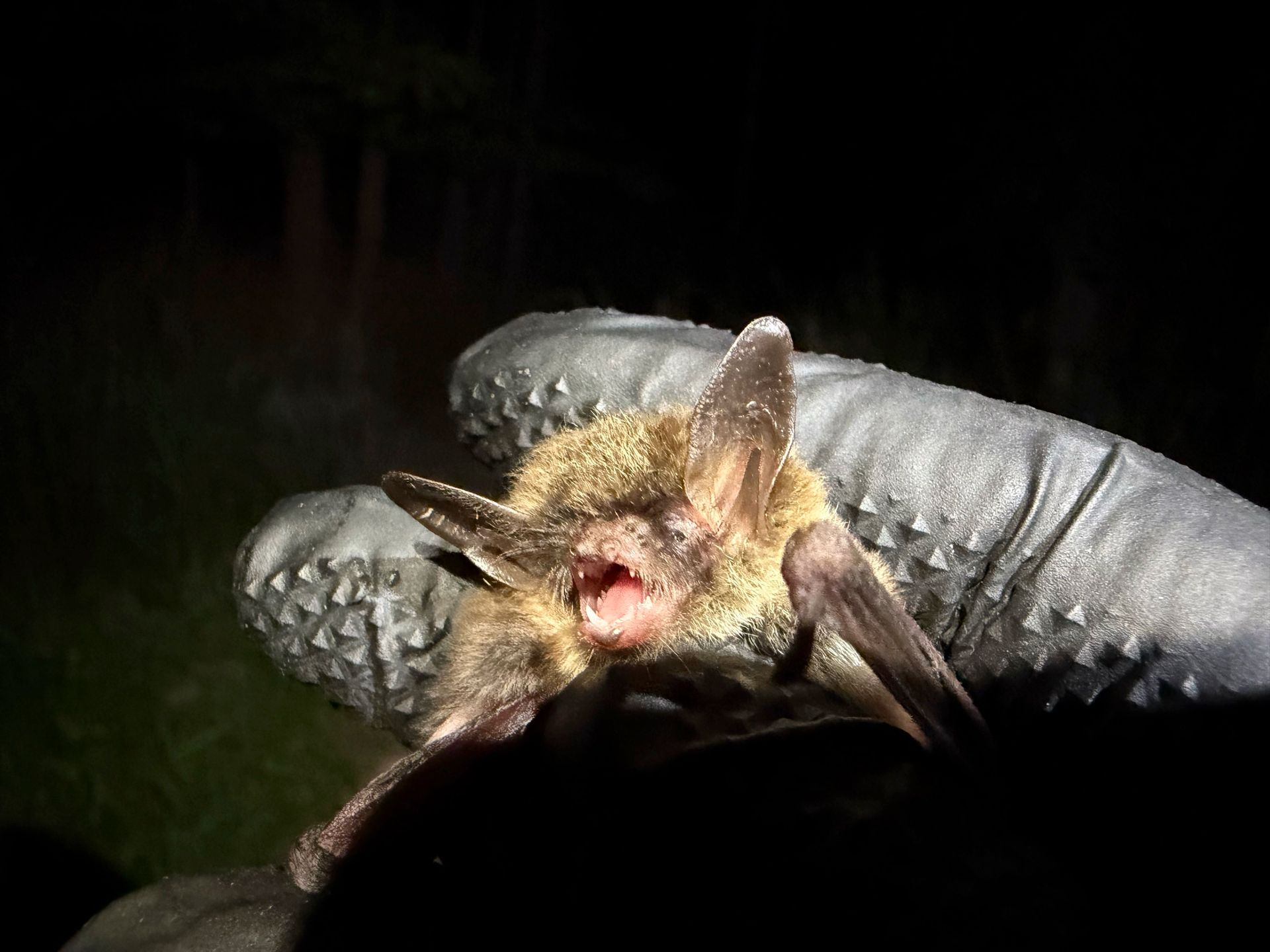
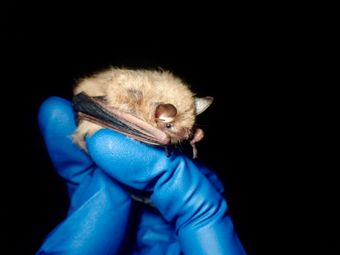
During a typical survey, fine mesh nets are strategically placed along forest edges, stream corridors, or flyways to capture bats in flight. Surveys are conducted during the active season under favorable weather conditions to maximize the chance of detecting target species. Once captured, each bat is carefully identified to species, sexed, aged, and then safely released.
For rare, threatened, or endangered species, individuals may be fitted with lightweight radio transmitters so they can be tracked to roosts and foraging areas. This radio telemetry data documents habitat use near proposed projects and provides critical information that helps guide siting decisions, impact avoidance, and conservation planning.
Mist net surveys are often required as part of Section 7 consultation under the Endangered Species Act (ESA) and support permitting for development, infrastructure, and land management projects. Volant helps clients navigate this process efficiently with science-based results that protect sensitive bat populations and keep projects moving forward.
How Acoustic Bat Surveys Work
Acoustic bat surveys are a non-invasive method used to detect and identify bat species by recording their ultrasonic calls. These surveys are especially useful for documenting species that are difficult to capture using mist nets alone or for monitoring bat activity over a larger area.
During an acoustic survey, our biologists deploy specialized ultrasonic detectors that record bat calls as they fly and forage. The resulting recordings are then analyzed using USFWS-approved software—and at Volant EcoServices, all acoustic data is manually vetted by experienced federally-permitted biologists to ensure accurate species identification. Our lead biologists have completed multiple acoustic training workshops and stay current on the latest detection techniques and call libraries.
Acoustic surveys follow the most recent USFWS bat survey guidelines and are often required to support presence/probable absence determinations for threatened and endangered bat species. Data collected can be used alongside mist net surveys, potential roost surveys, and habitat assessments to build a complete picture of bat activity in a project area.
By combining advanced equipment with manual analysis and regulatory expertise, Volant delivers reliable, defensible acoustic survey results that help clients meet compliance requirements and make informed land management decisions.
Do you have existing bat acoustic survey data that you need manually vetted? Volant has a team of trained, federally-permitted biologists capable of vetting your data. Contact us to discuss how we can help with your data analyses.
When Are Bat Hibernaculum Surveys Required vs. Active Season Surveys?
The type of bat survey required depends on when a project occurs and what habitats may be affected. Federal and state agencies, including the U.S. Fish and Wildlife Service, use seasonal survey approaches to evaluate potential impacts to listed bats such as the Indiana bat and northern long-eared bat.
Active season surveys are most common and are conducted during summer, when bats are foraging and moving across the landscape. These surveys typically include mist-netting, acoustic monitoring, and habitat assessments to determine presence or probable absence near a project site. If tree clearing, construction, or other habitat disturbance is planned during the active season, these surveys are usually recommended.
Hibernaculum surveys are triggered when projects may affect caves, mines, rock features, tunnels, or other underground structures that could serve as winter roosts. Because bats hibernate in these environments, winter surveys or habitat evaluations may be required to assess potential use and avoid disturbance to critical overwintering habitat.
In some cases, both survey types are needed to fully understand year-round bat use. Volant works closely with agencies to determine the appropriate approach and designs surveys that meet current USFWS guidelines while keeping projects on schedule and compliant.
What is Section 7 Consultation?
Section 7 Consultation is a key process under the Endangered Species Act (ESA) that ensures any project involving a federal action does not jeopardize the continued existence of listed species or destroy or adversely modify designated critical habitat. For example, Section 7 consultation may be triggered when a project requires a federal permit, uses federal funding, or occurs on federal land.
During a Section 7 consultation, the project proponent works closely with the U.S. Fish and Wildlife Service (USFWS) or National Marine Fisheries Service (NMFS) to evaluate potential impacts on threatened and endangered species. This often involves preparing a Biological Assessment (BA) that documents survey results—such as mist net or acoustic bat surveys—and outlines any measures that can avoid, minimize, or mitigate impacts.
If the BA determines that the project may affect listed species, the agencies will develop a Biological Opinion (BO) describing the anticipated effects and any required conservation measures. This process helps protect sensitive species like bats while providing project proponents with a clear path to regulatory compliance.
At Volant EcoServices, we assist clients through every step of Section 7 consultation by conducting required field surveys, preparing detailed documentation, and coordinating with agencies to keep projects on track.
What is NEPA and How Does it Affect My Project?
The National Environmental Policy Act (NEPA) is a cornerstone federal law that requires federal agencies to consider the environmental impacts of proposed actions before making decisions. If your project involves federal funding, federal permits, or occurs on federal land, NEPA may apply.
Under NEPA, projects are reviewed through an Environmental Assessment (EA) or, for more complex projects, an Environmental Impact Statement (EIS). These documents evaluate potential effects on resources like wildlife, water, habitat, and cultural sites. They also outline measures to avoid, minimize, or mitigate impacts.
For many projects, NEPA reviews often include threatened and endangered species surveys, habitat assessments, and coordination with agencies like the U.S. Fish and Wildlife Service (USFWS). For example, if surveys show that a rare species may be affected, Section 7 consultation may be triggered as part of the NEPA process.
Volant EcoServices helps clients navigate every step of NEPA compliance by conducting biological surveys, preparing technical documentation, coordinating with agencies, and developing mitigation plans when needed. Our goal is to provide clear, science-based data that keeps projects compliant and moving forward while upholding the intent of NEPA.
How Habitat Assessments Help with Permitting
Habitat assessments are an important first step in understanding how proposed projects may affect sensitive species and natural resources. These assessments evaluate the suitability and quality of habitats that could support threatened, endangered, or otherwise protected species.
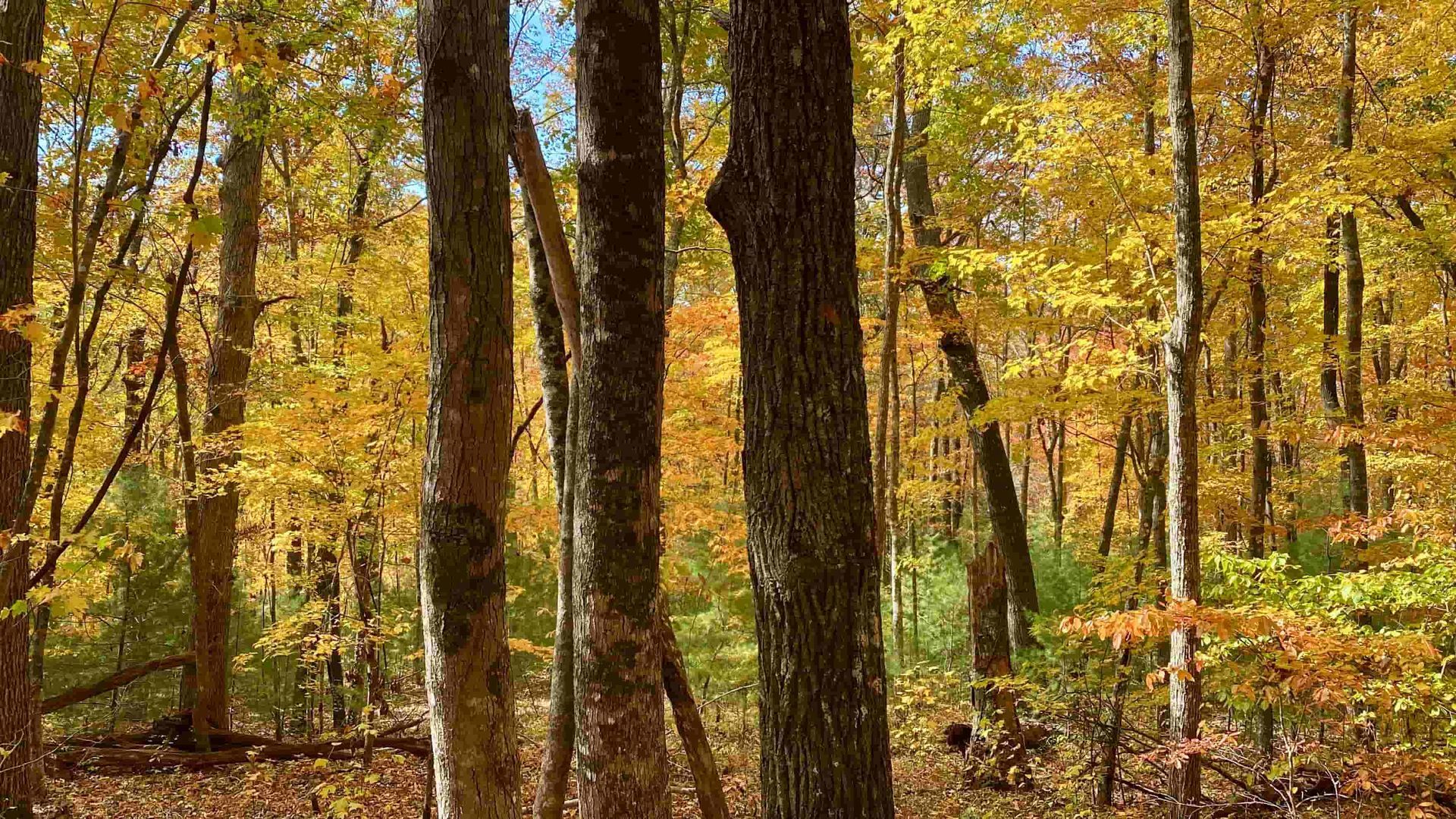
For projects that require federal or state permits, a well-executed habitat assessment helps determine whether further surveys are needed—such as presence/probable absence surveys for bats, migratory birds, or other wildlife. By identifying critical habitat features like potential roost trees, wetlands, or hibernacula, our team provides science-based information that guides siting decisions, minimizes impacts, and informs necessary mitigation measures.
A thorough habitat assessment helps landowners, developers, and agencies comply with regulatory requirements under the Endangered Species Act (ESA), National Environmental Policy Act (NEPA), and other state and local conservation laws. For example, documenting the absence of suitable habitat can sometimes eliminate the need for additional surveys, saving time and resources.
Volant EcoServices combines field expertise and regulatory knowledge to deliver clear, defensible habitat assessments. Our work supports sound decision-making and keeps projects moving forward responsibly while protecting biodiversity.