Why Potential Bat Hibernacula Surveys Matter — and When Your Project Needs One
Most land development and infrastructure projects are designed with summer in mind — trees cleared, ground broken, construction underway between spring and fall. For ESA compliance, that means bat surveys focused on summer roosting habitat are usually the first thing on the checklist. But a second category of bat survey obligation exists that is entirely separate from summer P/A surveys, operates on a different seasonal calendar, and can catch projects off guard when it appears: the potential bat hibernaculum survey.
If your project is anywhere near a cave, abandoned mine, tunnel, rock outcropping, sinkhole, or similar subsurface feature, this article explains what the 2026 USFWS Range-wide Indiana Bat and Northern Long-Eared Bat Survey Guidelines require, when a hibernaculum survey is triggered, what the survey process involves, and what happens if a target species is confirmed at the site.
What is a bat hibernaculum?
A hibernaculum — plural hibernacula — is a thermally stable underground or enclosed feature that bats use for extended periods of torpor during winter. For the three target species under the 2026 guidelines, hibernacula are not an incidental habitat type. They are essential survival infrastructure, and the loss or disturbance of a hibernaculum can affect entire colonies.
Indiana bat, northern long-eared bat, and tricolored bat have been documented using caves, sinkholes, rock fissures, and other karst features, as well as anthropogenic features such as mines and tunnels as winter hibernation habitat.
The target species do not all use the same types of hibernacula, and this distinction matters for assessment purposes. Tricolored bats often use a much wider variety of hibernacula and warmer microclimates than would traditionally be considered suitable for Indiana bats and northern long-eared bats. Additionally, northern long-eared bats and tricolored bats have the potential to use smaller cave-like features such as rock shelters, outcrops, and talus formations. Coordination with the local USFWS Field Office is specifically recommended in the guidelines to ensure that TCB habitat assessments appropriately account for this broader range of suitable features.
Bridges and culverts represent a separate but related category — they can function as bat roost sites and are addressed under their own assessment and survey protocols in the 2026 Guidelines. This post focuses on underground and cave-like features.
When does a project trigger a hibernaculum assessment?
Project proponents are responsible for evaluating whether any potentially suitable hibernacula exist within a proposed project area. This obligation is built into the initial project screening process and applies regardless of whether summer bat surveys have already been completed. A negative summer P/A survey does not substitute for a hibernaculum assessment, and the two are treated as independent requirements under the guidelines.
Potential hibernacula surveys are in addition to any summer or year-round active season surveys that may be required for a proposed project.
The types of projects most likely to trigger a potential hibernacula assessment include anything involving ground disturbance, blasting, demolition, water table changes, or obstruction of access near subsurface features — including mining operations, quarrying, tunneling, road construction through karst terrain, utility installation in areas with known cave systems, and demolition or rehabilitation of structures built over or adjacent to underground features.
Step one: desktop analysis and initial field reconnaissance
Before any field work is conducted at a potential hibernaculum, the 2026 guidelines require a two-stage initial assessment process.
After coordinating with the local USFWS Field Office and appropriate state natural resource agency, a desktop analysis and initial field reconnaissance should be completed by individuals with a natural resource degree or equivalent work experience and an in-depth understanding of cave and karst topography and/or surface features associated with underground mines.
For all projects, a USFWS-approved field survey of all land within 0.5 miles of the edge of the project footprint — where access can be obtained — and documentation of all known caves and abandoned mines within 3 miles of the outside edge of the project footprint should be conducted. If caves or abandoned mines are found, further detail about the known or estimated underground extent should be provided to the USFWS Field Office, including minimum and maximum depth of features and where those features are located on a map.
Documentation for this stage draws from a range of sources: literature searches, maps from local cave survey groups or grottos, review of aerial photography and topographic maps, previous mining records, forest inventories, and previous species survey reports.
What makes a feature unsuitable — and what doesn't
Not every underground opening requires a full hibernaculum assessment and survey. The 2026 guidelines identify specific physical conditions under which an opening can be deemed unsuitable and dismissed from further consideration. However, these thresholds are specific and should not be applied loosely.
In general, underground openings can be deemed unsuitable as a potential hibernaculum and dismissed from further assessment and surveys if:
- there is only one horizontal opening and it is less than 6 inches (15.2 cm) in diameter;
- vertical shafts are less than 1 foot (0.3 m) in diameter;
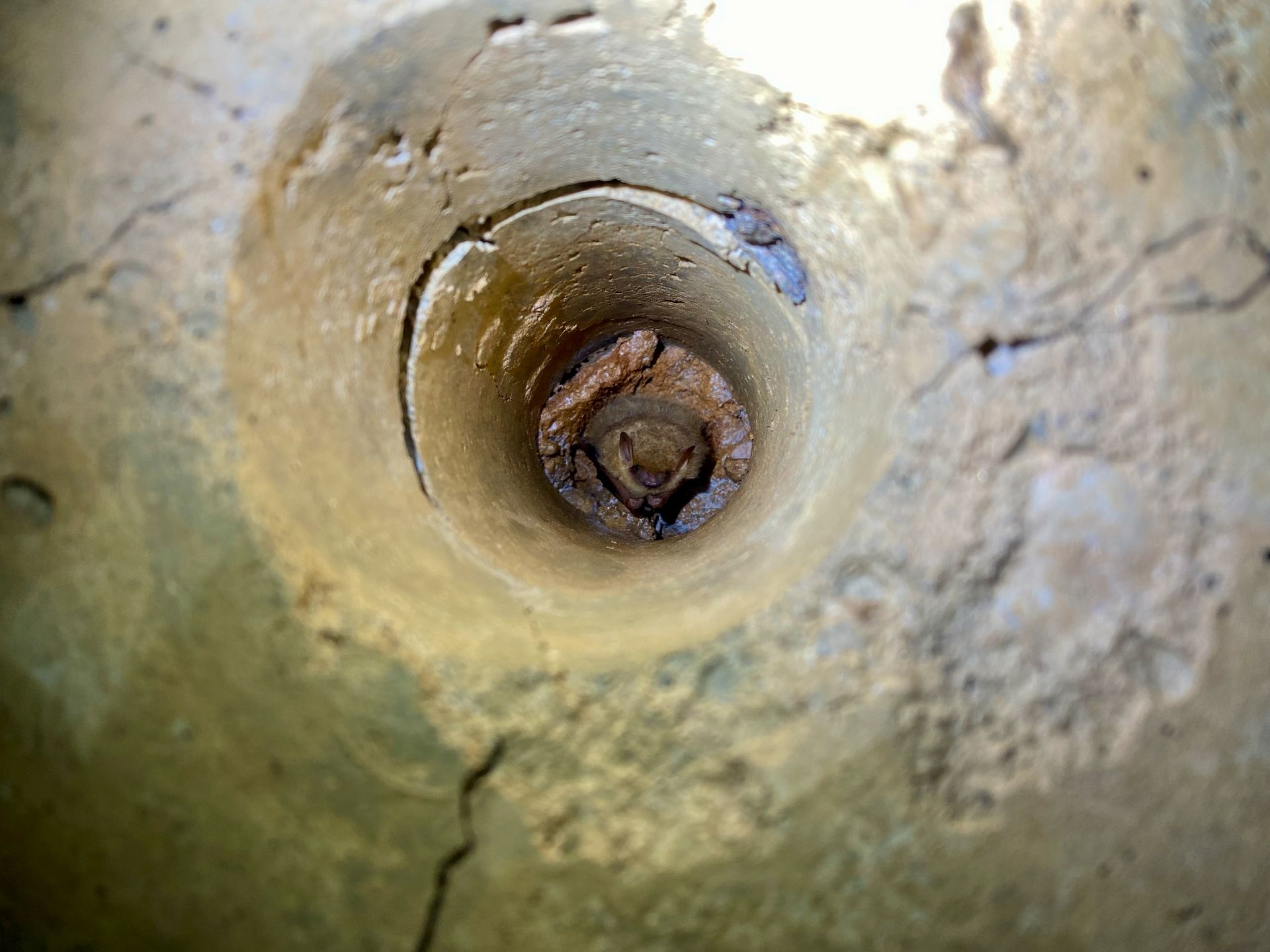
- the passage or opening extends a short distance — less than 50 feet (15.2 m) — with no visible evidence of bats or associated physical features such as visible fissures or crevices that bats can access;
- openings are prone to flooding, collapsed shut and completely sealed, or otherwise inaccessible to bats; or openings have occurred recently — within the past 12 months — due to human activity or subsidence, with written documentation verifying this determination.
Any feature that does not clearly meet one of these exclusion criteria should be treated as potentially suitable and carried forward for a full habitat assessment.
The results of initial field assessments should be submitted to the USFWS Field Office and state regulatory partners for review and approval prior to proceeding. Field Office-approved results will remain valid for a minimum of five years.
Step two: habitat assessment of potentially suitable hibernacula
If the initial reconnaissance identifies one or more potentially suitable features, a formal habitat assessment is required before any surveys can be conducted or before any project work affecting the feature can proceed.
Habitat assessments should include all subterranean entrances or openings that will be directly or indirectly impacted by the proposed project. This would include caves, sinkholes, fissures, other karst features, and cave-like features such as rock shelters, outcrops, and talus slopes, as well as anthropogenic features such as mines and tunnels that are within the project site or that are otherwise connected — by physical passageway, airflow, or hydrologically — to any underground feature that will be directly or indirectly impacted by the proposed project.
The connectivity element is critical and often overlooked. A feature that appears to be outside the project footprint on a map may still require assessment if it is hydrologically or physically connected to a feature being disturbed. Physical descriptors required for each opening assessed, including dimensions, airflow, slope, internal conditions, and evidence of past flooding.
The results of a habitat assessment should be submitted to the USFWS Field Office and state regulatory partners for review and approval prior to proceeding, and FO-approved results will remain valid for a minimum of five years.
One important note: if suitable winter habitat is discovered as a result of a habitat assessment, do not alter, modify, or otherwise disturb entrances or internal passages of caves, mines, or other entrances to underground voids within the action area before completing a presence/probable absence survey.
Step three: the potential hibernaculum P/A survey
If the habitat assessment confirms that a feature is potentially suitable and the project will directly or indirectly impact it, a presence/probable absence survey is required. The 2026 guidelines provide two primary hibernaculum survey methods.
Winter internal survey
The acceptable survey window for winter internal surveys is January 1 through February 28, with the traditional survey window for known sites being January 15 through February 15.
Potential hibernacula that are deemed safe to enter should be entered and all accessible passages visually surveyed for the presence of Indiana bat and tricolored bat during hibernation. The use of direct internal surveys is not adequate for northern long-eared bat, due to the difficulty in visually detecting the species inside hibernacula where it typically roosts in deep cracks and crevices.
Working near and within abandoned mines and caves can be inherently dangerous due to potential hazards including ceiling collapse and presence of toxic gases. Surveyors must thoroughly assess their work sites for any known and potential health and safety hazards and must use appropriate personal protective equipment. The USFWS highly recommends that surveyors seek counsel from an occupational health and safety professional prior to working underground or under other potentially hazardous field conditions.
Only properly trained and qualified individuals with the appropriate federal and/or state permits and equipment should attempt internal P/A surveys. If the qualified biologist who completed the habitat assessment does not have the necessary experience or permits to complete internal survey work, then this portion of the project should be subcontracted to another individual or group that does.
Fall and spring emergence surveys
For sites where internal surveys are not feasible — due to safety concerns, inaccessibility, or site configuration — fall or spring emergence surveys using harp traps or mist nets at the cave or mine entrance are the alternative method.
The acceptable survey window for fall emergence surveys is September 15 through October 31. The acceptable survey window for spring emergence surveys is April 1 through April 21.
The level of effort required for each approach differs significantly.
For fall surveys: a minimum of one night of harp trap sampling per week for six weeks — six nights of sampling total — is required at each suitable entrance as determined by the habitat assessment. Each night of sampling should be separated by at least one week if weather conditions allow. Survey effort may be suspended if no bats of any species are captured after the first two nights of acceptable survey effort in the fall.
For spring surveys: a minimum of three nights of harp trap sampling per week for three weeks — nine nights of sampling total — is required at each suitable entrance. Due to the need to monitor weather conditions closely, each proposed spring mine or cave survey must be coordinated with the USFWS Field Office prior to surveying to ensure adequate survey results are achieved.
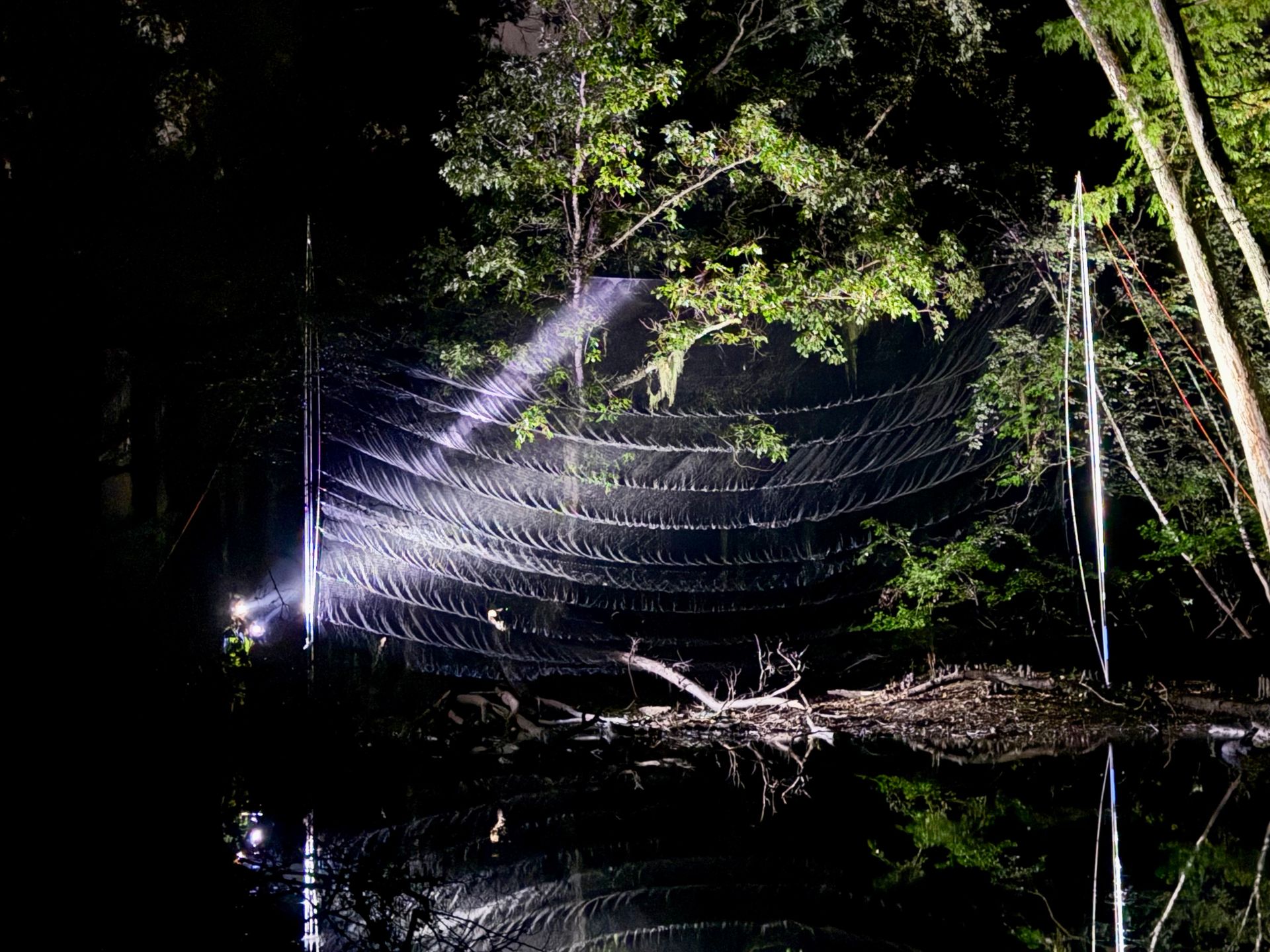
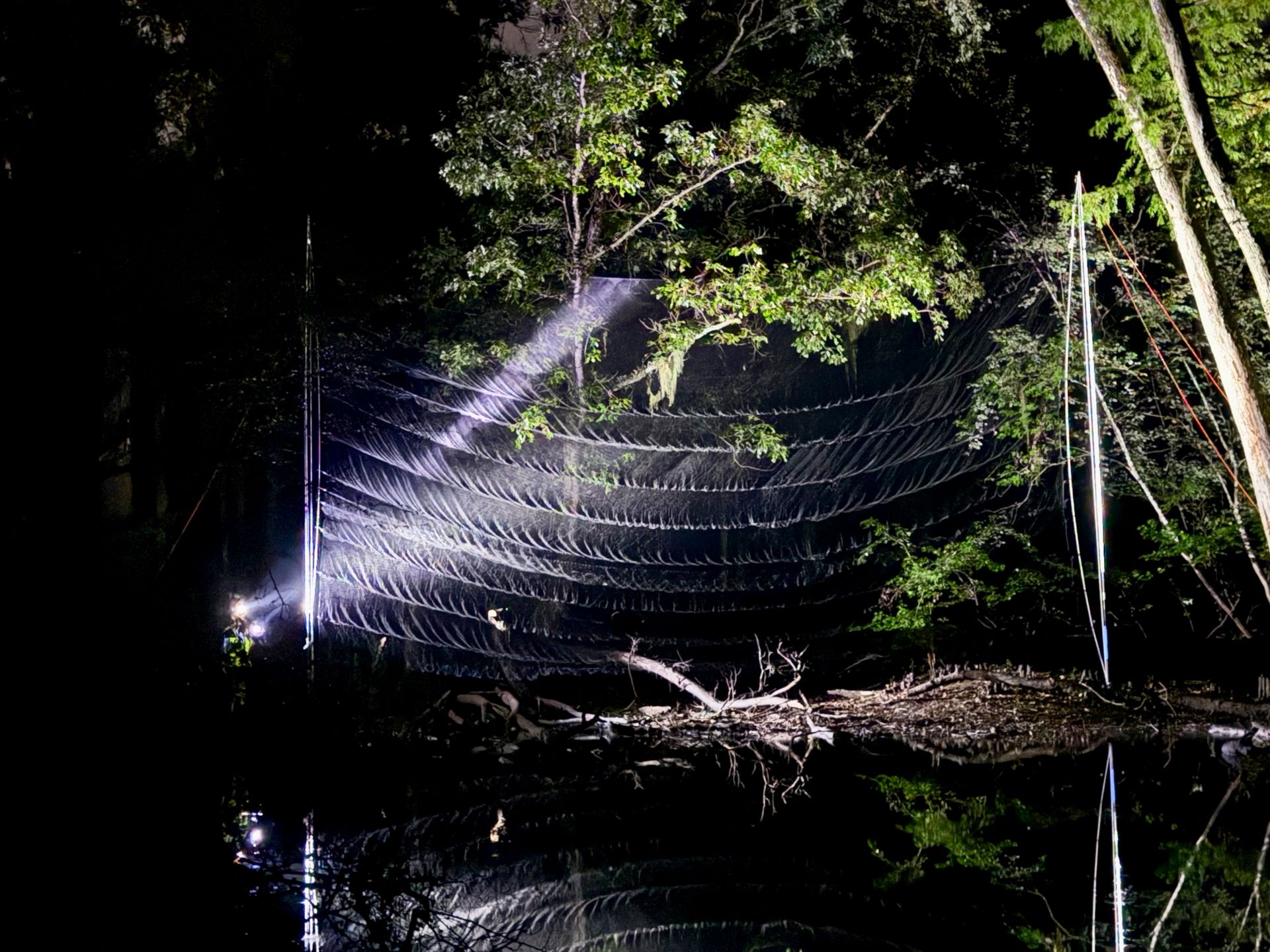
Harp traps are the preferred capture method for sampling entrances as they are less stressful on captured bats. Mist nets can also be deployed along corridors immediately adjacent to the entrance to increase survey effectiveness, but their use must be approved by the USFWS Field Office and appropriate state natural resource agency prior to initiation of survey.
The sampling period should begin at sunset and continue for at least five hours each night. A total of 30 hours of sampling for fall surveys and 45 hours for spring surveys should take place for a mine or cave survey to be approved.
What happens when a target species is confirmed
A confirmed detection of IBAT, NLEB, or TCB at a potential hibernaculum significantly changes the trajectory of a project.
Unless otherwise approved by the USFWS Field Office, the capture of an Indiana bat, northern long-eared bat, and/or tricolored bat during a fall or spring potential hibernacula survey requires that the applicant complete three additional nights of sampling per week for three consecutive weeks — nine additional nights of level of effort — to determine the relative significance of the hibernaculum and its associated underground workings. If the survey season ends prior to the completion of the required additional sampling, then sampling must be completed the following fall or spring.
If IBAT, NLEB, and/or TCB are captured during fall or spring surveys, notification to the local USFWS Field Office is required within 48 hours, and the sex and reproductive condition of the bat and GPS coordinates of the capture site must be provided.
From a project planning standpoint, a confirmed hibernaculum detection triggers a level of USFWS coordination that is substantially more involved than a summer P/A survey outcome. The significance of the hibernaculum — colony size, species composition, whether it represents a major or minor roosting site — will inform what conservation measures the USFWS requires before project work near the feature can proceed.
Personnel and permit requirements
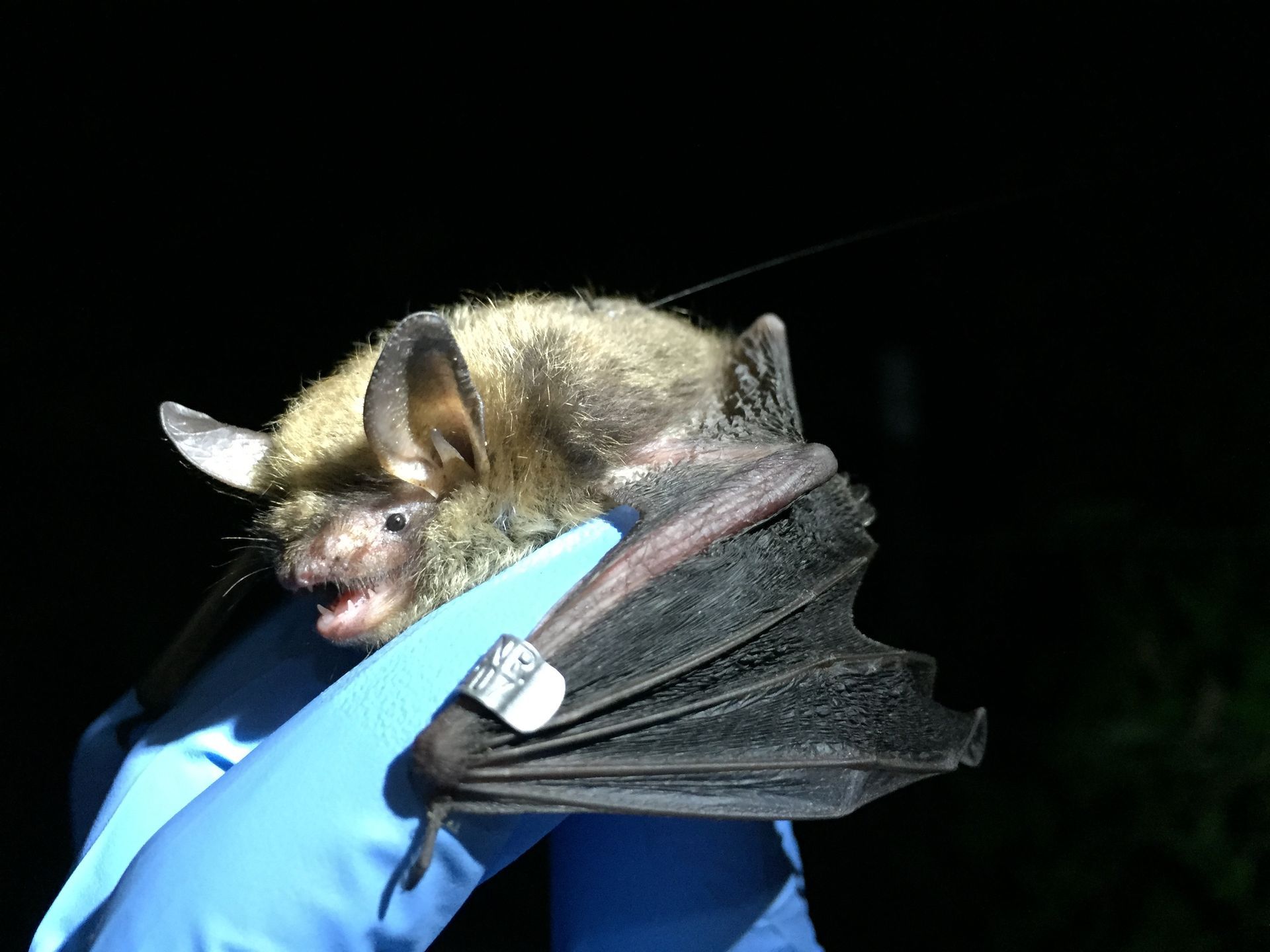
At least one member of each survey crew must hold a valid USFWS Section 10(a)(1)(A) recovery permit as well as any applicable state agency permits that allow the qualified biologist to collect bats, including federally listed species. A qualified biologist must select and approve harp trap and mist-net sets, be physically present at each site throughout the survey period, and confirm all bat species identifications.
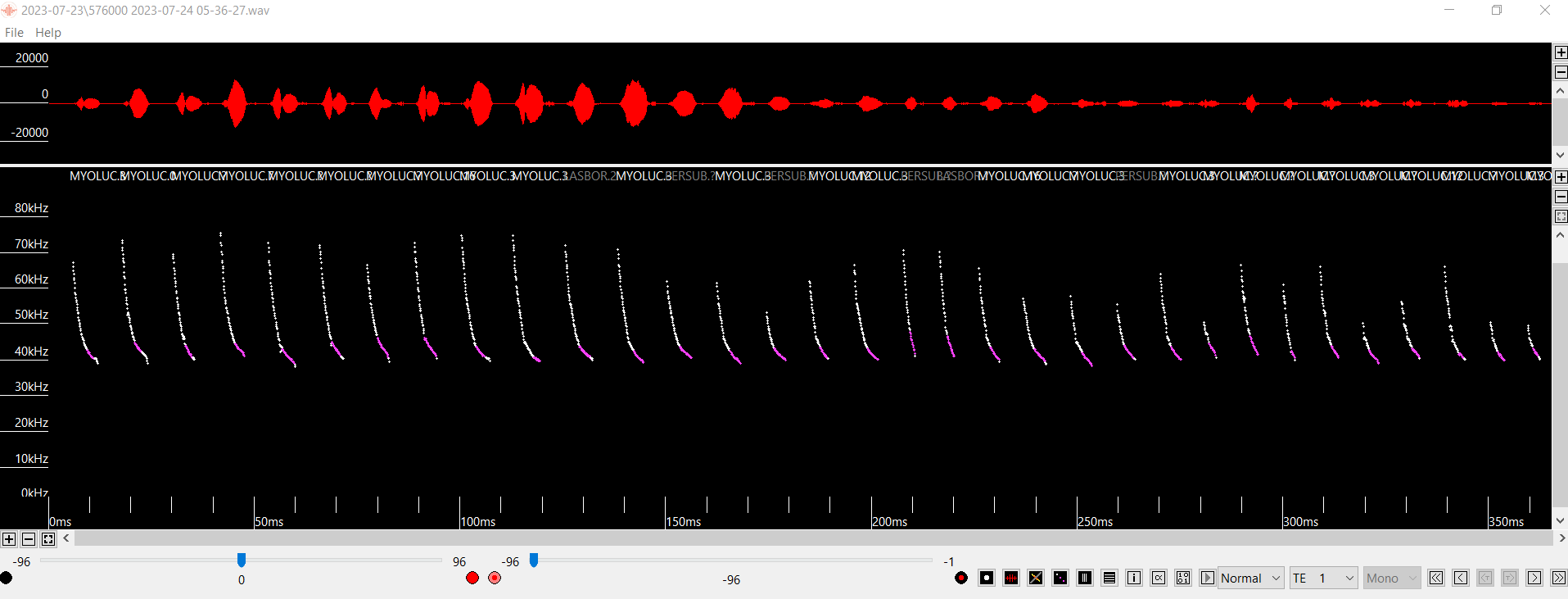
This permit requirement applies to fall and spring emergence surveys as well as internal surveys. Acoustic surveys conducted at a mine or cave entrance as a supplemental tool do not require a recovery permit, but acoustic collections at bridges or culverts should only be used as a supplement to a larger suite of structural survey approaches and cannot be used alone to determine species identification. The same logic applies at cave and mine entrances — acoustics alone at a hibernaculum entrance are not a substitute for harp trap sampling.
How hibernaculum surveys relate to summer surveys and project timelines
The seasonal timing of potential hibernacula surveys creates a planning challenge that is distinct from summer bat surveys. Summer P/A surveys occur between May 15 and August 15 in the hibernating range. Hibernacula surveys are conducted in winter (January–February for internal surveys) or during the narrow fall and spring emergence windows. A project that needs both survey types — because it involves tree clearing in suitable summer habitat and work near a potential hibernaculum — must plan for two separate survey windows that may span more than one calendar year.
Results of completed potential hibernacula surveys must be submitted to the appropriate USFWS Field Office prior to clearing or altering identified summer and winter bat habitat. The USFWS Field Office will review the results for the purposes of determining whether target species are occupying hibernacula in the project area and whether they may be adversely affected by any proposed actions.
For a project on a tight construction schedule, the worst-case scenario is discovering a potential hibernaculum during habitat assessment in the spring or summer of year one — after the spring emergence window has closed — and being unable to conduct a fall emergence survey until September at the earliest, with results not available for USFWS review until late fall or early winter. If a target species is confirmed, the additional nine-night survey requirement then pushes completion into the following year's spring window. Identifying potential hibernacula early — ideally during the initial desktop screening before any construction scheduling is finalized — is the only way to avoid this outcome.
What to do if your project area has subsurface features
The starting point is always the desktop analysis and initial field reconnaissance. If you are planning a project in karst topography, in areas with historical or active mining, in regions with known cave systems, or anywhere a subsurface feature could be present, the following steps should happen early in the project timeline — not after construction scheduling is locked.
Coordinate with your local USFWS Ecological Services Field Office through IPaC to determine whether any known hibernacula for the target species are documented near your project area. Commission a habitat assessment from a qualified biologist with specific experience in cave and karst topography assessment or underground mine assessment. Submit results to the USFWS Field Office for review before any work near the feature begins. If surveys are warranted, contact a permitted biologist well in advance of the fall survey window — September 15 arrival means your biologist needs to have an approved study plan before mid-September.
Do not disturb, modify, or block any entrance to a potentially suitable hibernaculum before the survey process is complete.
Volant EcoServices conducts potential bat hibernacula assessments and surveys across the eastern United States. Both co-founders, Mary Gilmore and Dan Cox, hold active USFWS Section 10(a)(1)(A) Recovery Permits for Indiana bat, northern long-eared bat, and gray bat — the federal authorization required to legally capture bats at cave and mine entrances during fall and spring emergence surveys. If your project involves subsurface features or karst terrain, contact us early. Learn about our hibernaculum survey services or contact us to discuss your project.