Acoustic vs. Mist-Net Bat Surveys: Which Method Does Your Project Need?
If you've been told your project requires a bat survey, the next question is usually: what kind? Not every bat survey is the same, and the method your project needs — acoustic monitoring, mist-netting, or a combination of both — depends on factors that are specific to your site, your project's footprint, and where you fall relative to known bat occurrences.
Choosing the wrong approach, or hiring a firm that can only provide part of the picture, can mean redoing work, missing the survey window, or being sent back to the drawing board by your USFWS Field Office. This article breaks down both methods, explains how they work together under the 2026 USFWS Range-wide Bat Survey Guidelines, and helps you understand what your project actually needs before you make any commitments.
What both methods have in common
Whether a project uses acoustics, mist-netting, or both, the goal is the same: to establish the presence or probable absence (P/A) of one or more target species — the Indiana bat, northern long-eared bat (NLEB), and tricolored bat (TCB) — within the project area during the summer/year-round active season.
Both methods must be conducted by qualified biologists during the approved survey window (May 15 – August 15 for most of the eastern U.S.), must follow a USFWS-approved study plan, and must produce results that are reported to the coordinating Field Office regardless of outcome. The minimum prescribed level of survey effort cannot be completed in a single calendar night, regardless of which method is used. Planning around this multi-night minimum is one of the most common things project managers underestimate when they're scheduling bat survey work.
Acoustic bat surveys: how they work
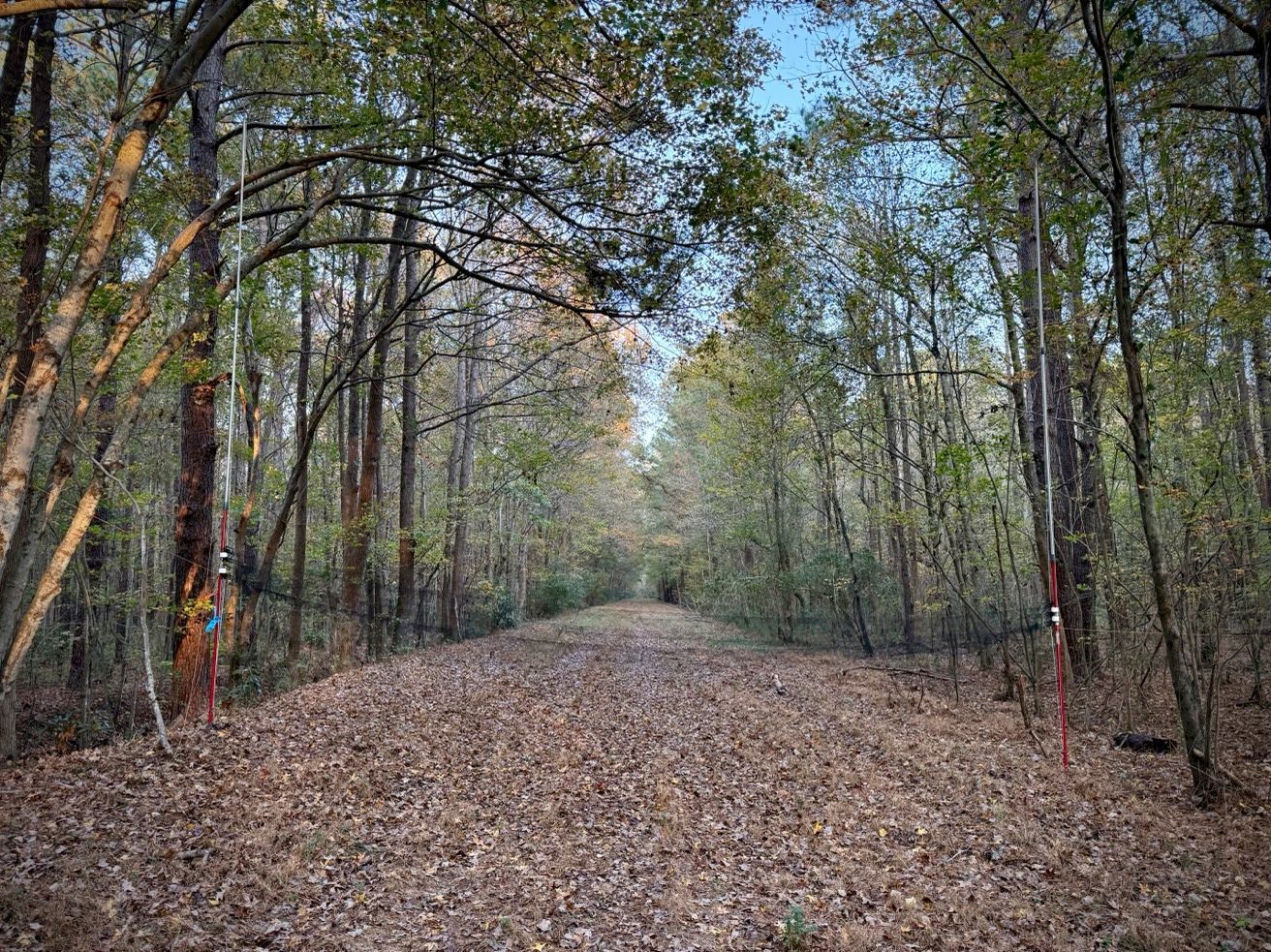
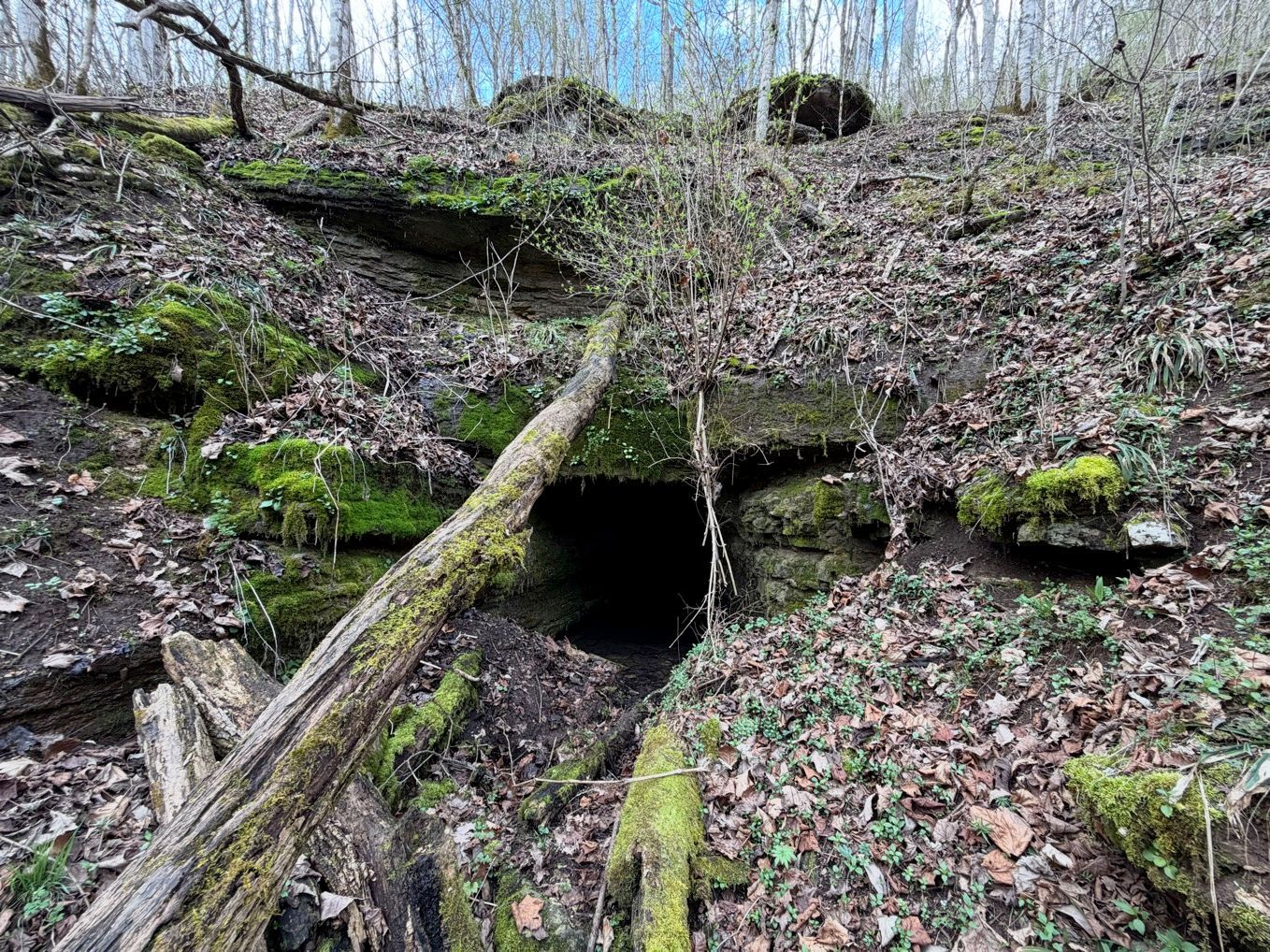
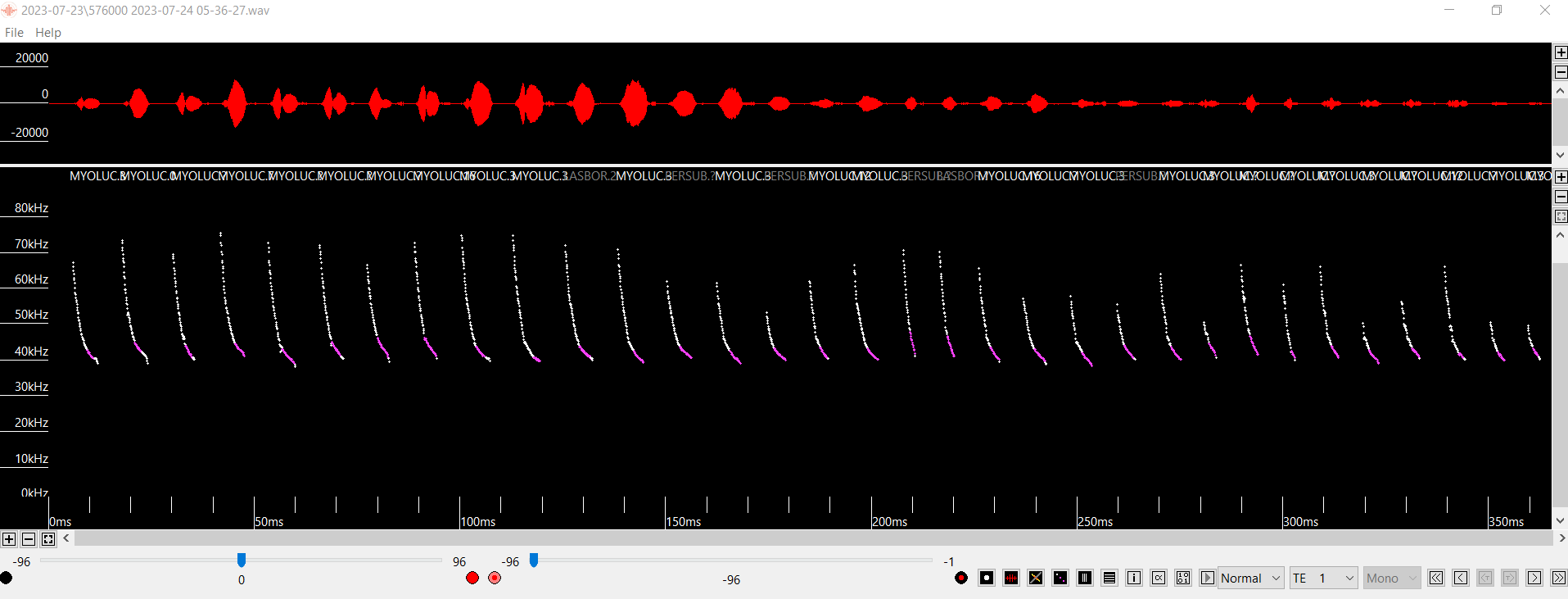
Acoustic bat surveys use ultrasonic detectors placed at survey sites to record echolocation calls overnight. Trained biologists deploy detectors in locations that maximize detection probability — typically along forest edges, over water features, and near roost habitat — and retrieve them after the prescribed number of nights. The call files are then analyzed using USFWS-approved software programs (currently SonoBat and the latest approved version of Kaleidoscope Pro) to identify species based on call characteristics.
When acoustic surveys are sufficient on their own
If no high-frequency (HF) calls of 35 kHz or greater are detected during acoustic surveys, no mist-netting is required within that survey area, and probable absence for the target species can be established. For many projects with low-to-moderate habitat quality, an acoustic-only survey is a fully valid, more efficient path to P/A clearance.
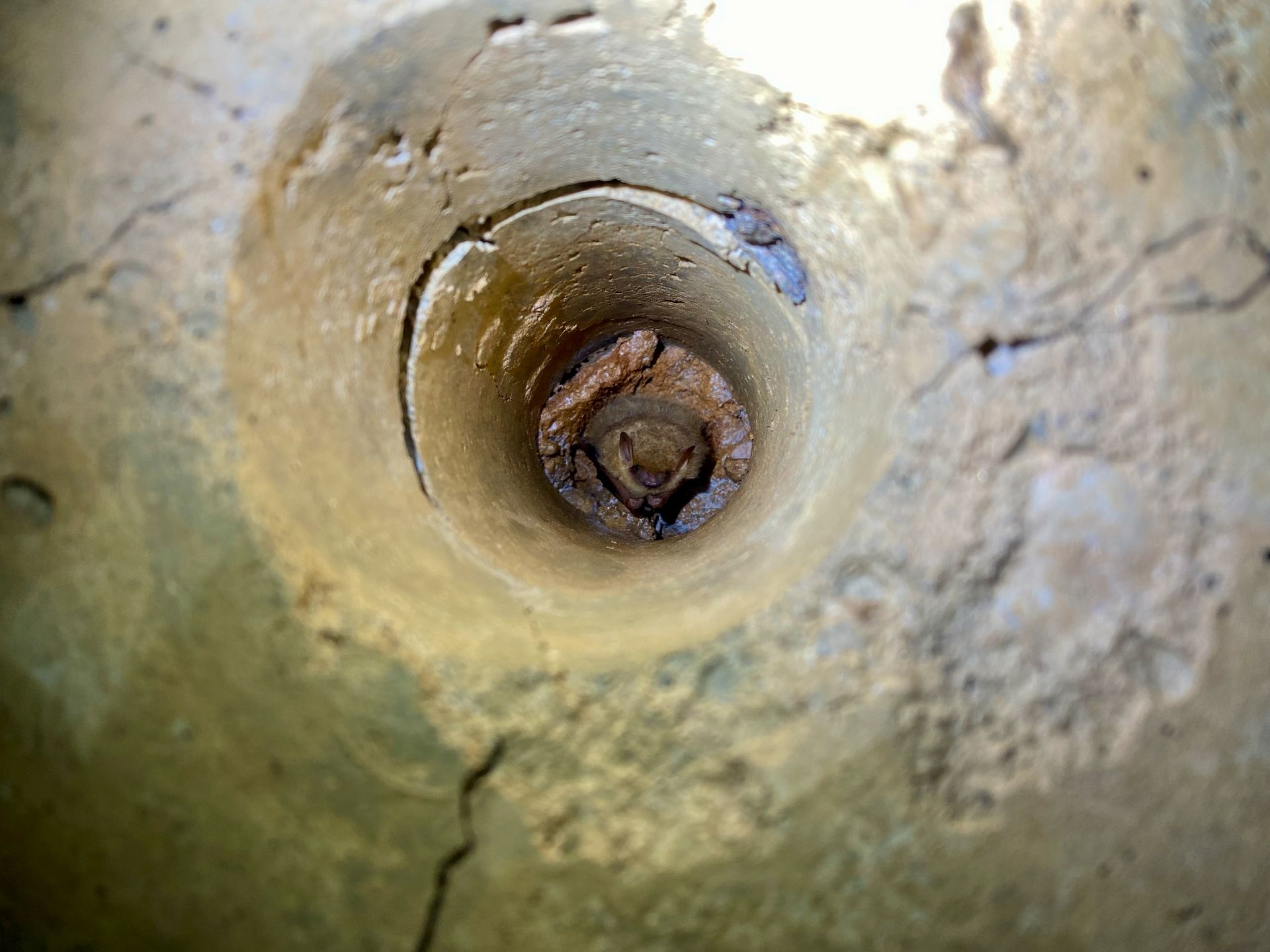
Acoustic surveys are also the only practical option in some situations. Terrain, site access, dense vegetation, or the absence of suitable net placement locations can make mist-netting physically impractical. In those cases, the biologist should coordinate with the local Field Office before finalizing the study plan, since site-specific conditions that do not lend themselves to standard survey techniques require FO coordination prior to using alternative methods.
What acoustic surveys cannot do
A positive acoustic detection establishes probable presence — and that determination is final. Negative results from follow-up mist-netting at any level of effort do not refute a previously established positive acoustic result. Once the acoustic record shows a target species is active in your project area, presence is established and no amount of additional netting changes that outcome. The project then moves into consultation with the USFWS to determine minimization and mitigation measures.
It's also worth noting that North American Bat Monitoring Program (NABat) acoustic surveys are not adequate to confirm probable absence of target species for project-specific determinations, even though they may provide useful supporting context. If your project area has NABat data on file, that data can inform the study plan, but it does not substitute for a project-level acoustic P/A survey.
Mist-net bat surveys: how they work
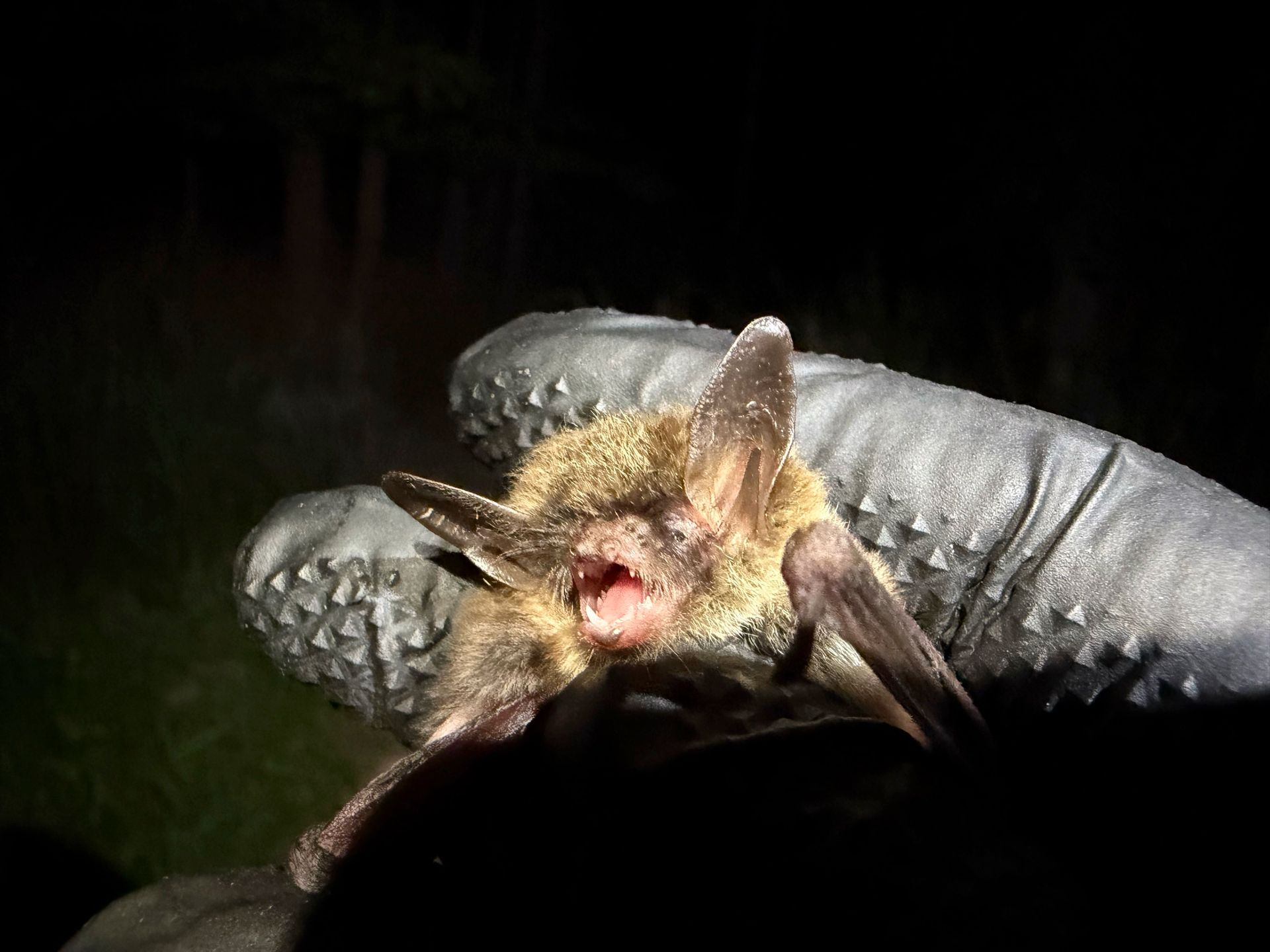
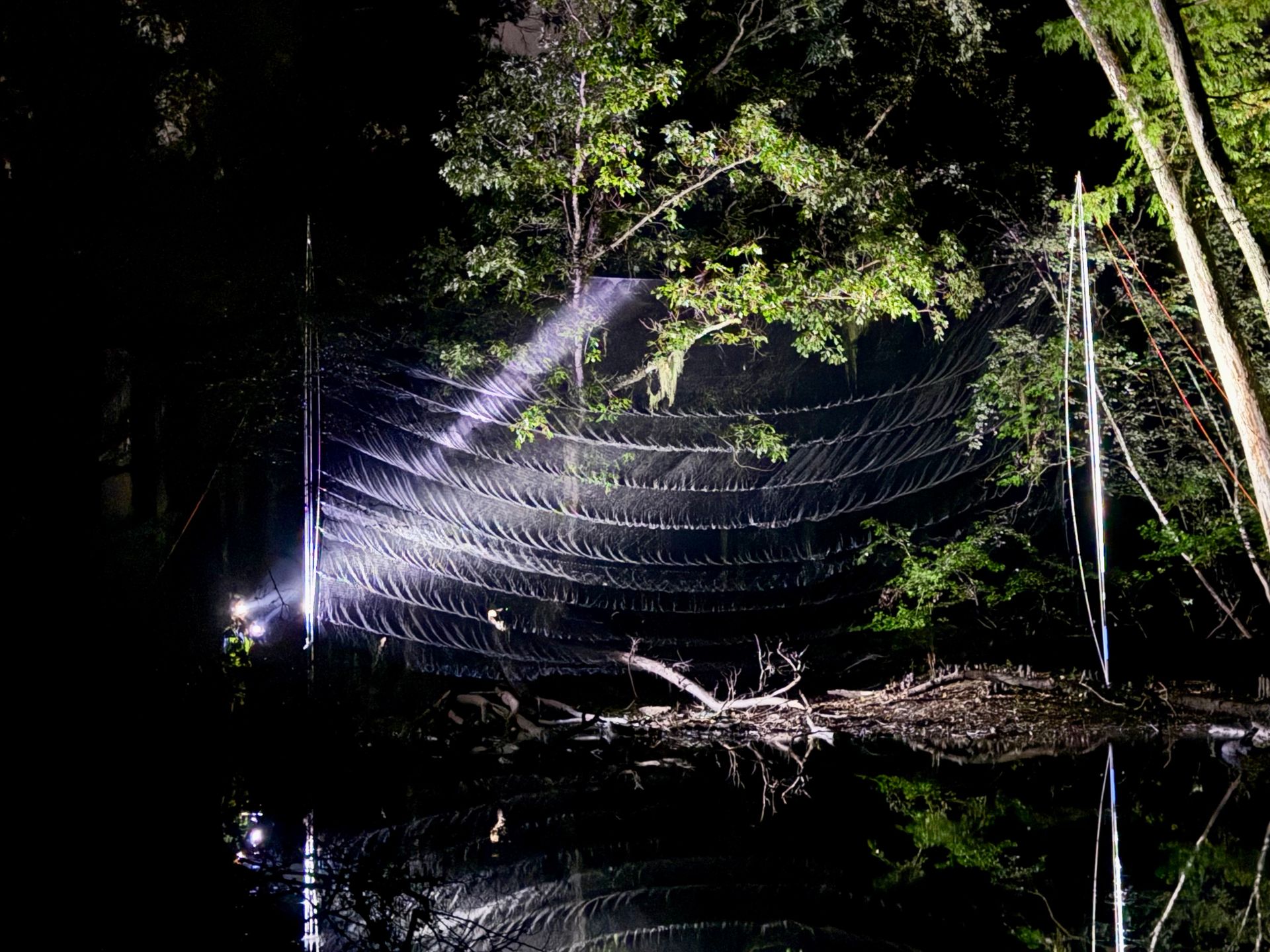
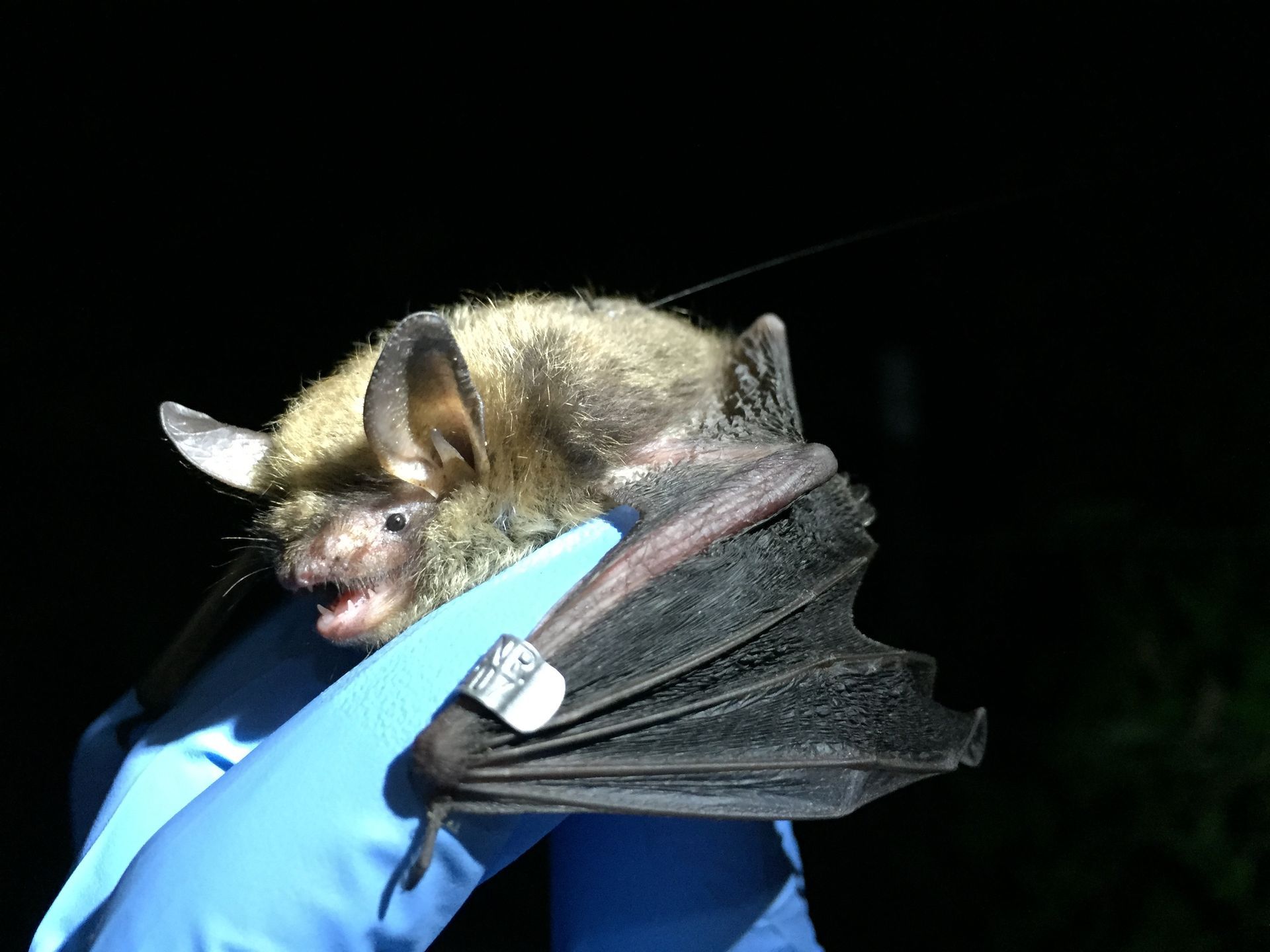
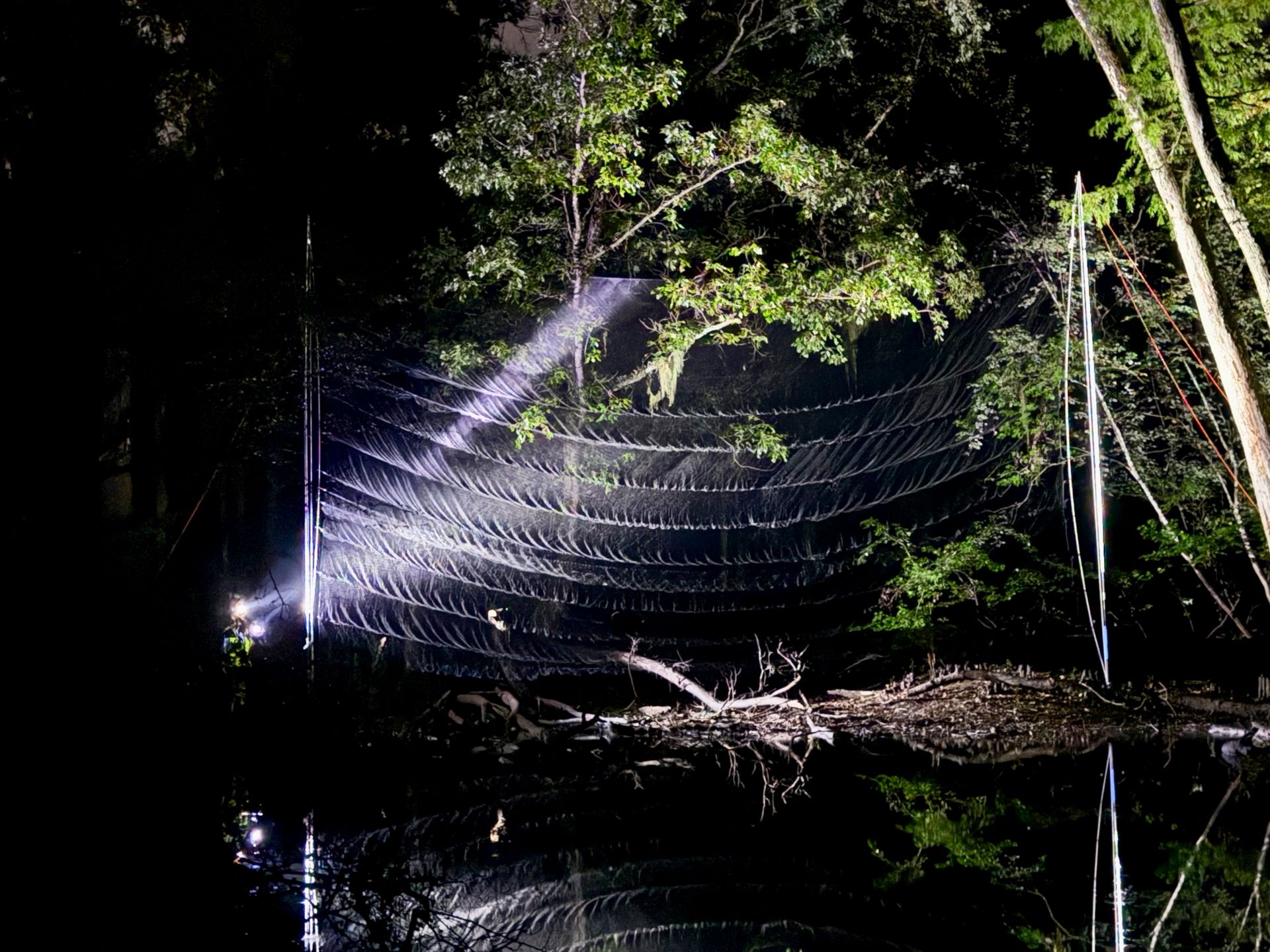
Mist-netting involves setting ultra-fine nets across bat flight corridors — typically at gaps in vegetation, along stream corridors, or near known roost features — after dark. Bats flying through the area become briefly captured in the net. The biologist extracts each bat, identifies it by species, records morphological measurements, and may band it or attach a small radio transmitter depending on the study plan objectives. The bat is then released at the capture site.
The permit requirement
This is the most important practical distinction between the two methods. Because mist-netting results in the physical capture of listed bats, it constitutes "take" under the Endangered Species Act. Surveys involving physical capture and handling of federally listed species require an ESA Section 10(a)(1)(A) recovery permit, which authorizes capture for identification and handling for measurements, photography, banding, and radio transmitter attachment. Not every ecological consulting firm holds this permit. Before engaging any firm for mist-net surveys, confirm that the lead biologists have current, active recovery permits covering the specific species present in your project area.
Volant EcoServices' co-founders, Mary Gilmore and Dan Cox, both hold active USFWS Section 10(a)(1)(A) Recovery Permits for Indiana bat, northern long-eared bat, and gray bat. Having two permitted biologists on the same team provides meaningful operational flexibility — particularly for larger projects or tight scheduling windows where split crews may be needed simultaneously across a survey area.
When mist-netting is required
Mist-netting becomes required when acoustic surveys detect probable bat activity. If any HF calls are detected during acoustic Phase 2 surveys, mist-netting at the Phase 2 level of effort is then required within that survey unit. This is why the two methods are so frequently used together: acoustics efficiently screens the site, and netting is triggered only where the acoustic data indicates bat activity.
Mist-netting may also be the primary P/A method from the start, depending on site conditions, habitat quality, and USFWS Field Office preferences in your region. For high-quality Indiana bat habitat — mature forest patches with trees of 5-inch DBH or larger — your Field Office may require or recommend leading with netting rather than treating acoustics as the Phase 1 screen.
Federal guidance requires a minimum of two biologists — one permitted and one technician — present for every four net-sets being operated during a survey. Acoustic surveys cannot be completed in a single night and must be split across a minimum of two calendar nights under the range-wide guidance. Designing a study plan that satisfies USFWS requirements simultaneously starts with understanding these minimum staffing and timing constraints upfront.
The hybrid approach: how acoustic and mist-net surveys work together
Most larger projects — or projects in areas with high-quality bat habitat — use a phased approach that combines both methods. This is also the most defensible study design from a regulatory standpoint because it layers multiple lines of evidence into the P/A determination.
Under the 2026 guidelines, the general hybrid sequence works like this:
- Acoustic screening. Detectors are deployed at survey sites across the project area for the required number of nights. Files are analyzed using USFWS-approved software.
- If no HF calls are detected: Probable absence is established for that survey unit. No netting is required.
- If HF calls are detected: Mist-netting is triggered at the Phase 2 level of effort at those locations.
- If netting captures target species: Presence is confirmed. Depending on the study plan, radio-tracking may follow to locate roost trees and refine the area of occupancy for USFWS consultation.
- If netting produces no captures: Probable absence is established for the netting phase — but only if the original acoustic results did not already establish probable presence. The study plan should be written carefully to make this sequence clear to the USFWS Field Office.
Any project study plan that includes use of both acoustics and mist-netting needs to be written clearly to avoid potential misunderstandings between the project proponent and the USFWS Field Office regarding which method is serving as the P/A method and what the outcomes of each phase mean. This is where having an experienced bat biologist who has written dozens of study plans — and has an existing working relationship with the local FO — makes a material difference.
How to decide what your project needs
A permitted bat biologist should make the final call on survey method after reviewing your project footprint, the habitat assessment, and your local USFWS Field Office's documented preferences. That said, here's a general framework:
Start with acoustics alone if:
- The project area has low-to-moderate quality bat habitat (limited mature forest, fragmented cover)
- Site access or physical conditions make mist-net placement impractical
- The project is in the outer tier of a known occurrence buffer and the Field Office has indicated acoustic-only surveys are acceptable
Plan for mist-netting (or a hybrid) if:
- The project area includes high-quality Indiana bat or NLEB roosting habitat (mature forest, riparian corridors)
- The project is a large linear project (transmission line, road, pipeline) requiring survey across multiple habitat units
- Prior acoustic or occurrence data in the vicinity suggests bat activity is likely
- Your USFWS Field Office has historically required netting for projects of this type in this area
- You need the most defensible P/A determination possible — for example, on a federally permitted project subject to Section 7 consultation
You will definitely need a permitted mist-net biologist if:
- Any acoustic survey conducted on or near the project area has ever detected probable target species presence
- The project is already within an inner-tier occurrence buffer and the USFWS FO is requiring capture data to inform minimization measures
- Radio-tracking or roost tree identification is part of the scope
What to ask when hiring a bat survey firm
Before signing any contract for bat survey work, get clear answers to these questions:
- Does the lead biologist hold an active USFWS Section 10(a)(1)(A) Recovery Permit for the relevant species? Confirm which species are covered — permits are species-specific. A firm permitted only for general wildlife surveys is not cleared to conduct mist-netting for Indiana bat or NLEB.
- Has the firm worked with your specific USFWS Ecological Services Field Office before? Study plan review timelines and FO preferences vary significantly by region. A biologist with an established relationship with the FO serving your project area will move faster and hit fewer surprises.
- Can the firm handle the full sequence — habitat assessment, study plan, acoustics, mist-netting, and results reporting — under one contract? Splitting these responsibilities across multiple vendors increases coordination risk and can create gaps in the reporting record.
- What software is the firm using for acoustic analysis, and is it on the current USFWS-approved list? The approved software list is updated periodically; using an unlisted or outdated version can invalidate acoustic data.
Volant EcoServices provides the full scope of listed bat survey services across the eastern United States — habitat assessments, acoustic P/A surveys, mist-net surveys (both Dan Cox and Mary Gilmore hold active USFWS Recovery Permits for Indiana bat, northern long-eared bat, and gray bat), radio-tracking, and USFWS study plan coordination. Survey season opens May 15. Contact us to discuss your project.