Bat Survey and Radio Telemetry in Arkansas
Project type: Mist-net survey, radio-telemetry, and roost tracking
Location: Arkansas
Role: Subcontractor to
Biotope Forestry & Environmental, LLC
Target species: Indiana bat (Myotis sodalis), Northern long-eared bat (Myotis septentrionalis), Tricolored bat (Perimyotis subflavus)
Date:
2026
The Project
Volant EcoServices provided field survey support to Biotope Forestry & Environmental, LLC on a regulatory compliance project in Arkansas. Volant's role was to conduct mist-net surveys and radio-telemetry work in support of the prime consultant's compliance effort.
Details of the client and project purpose are confidential. What follows describes Volant's field contribution and a notable finding the crew documented in the course of the work.
What Volant Did
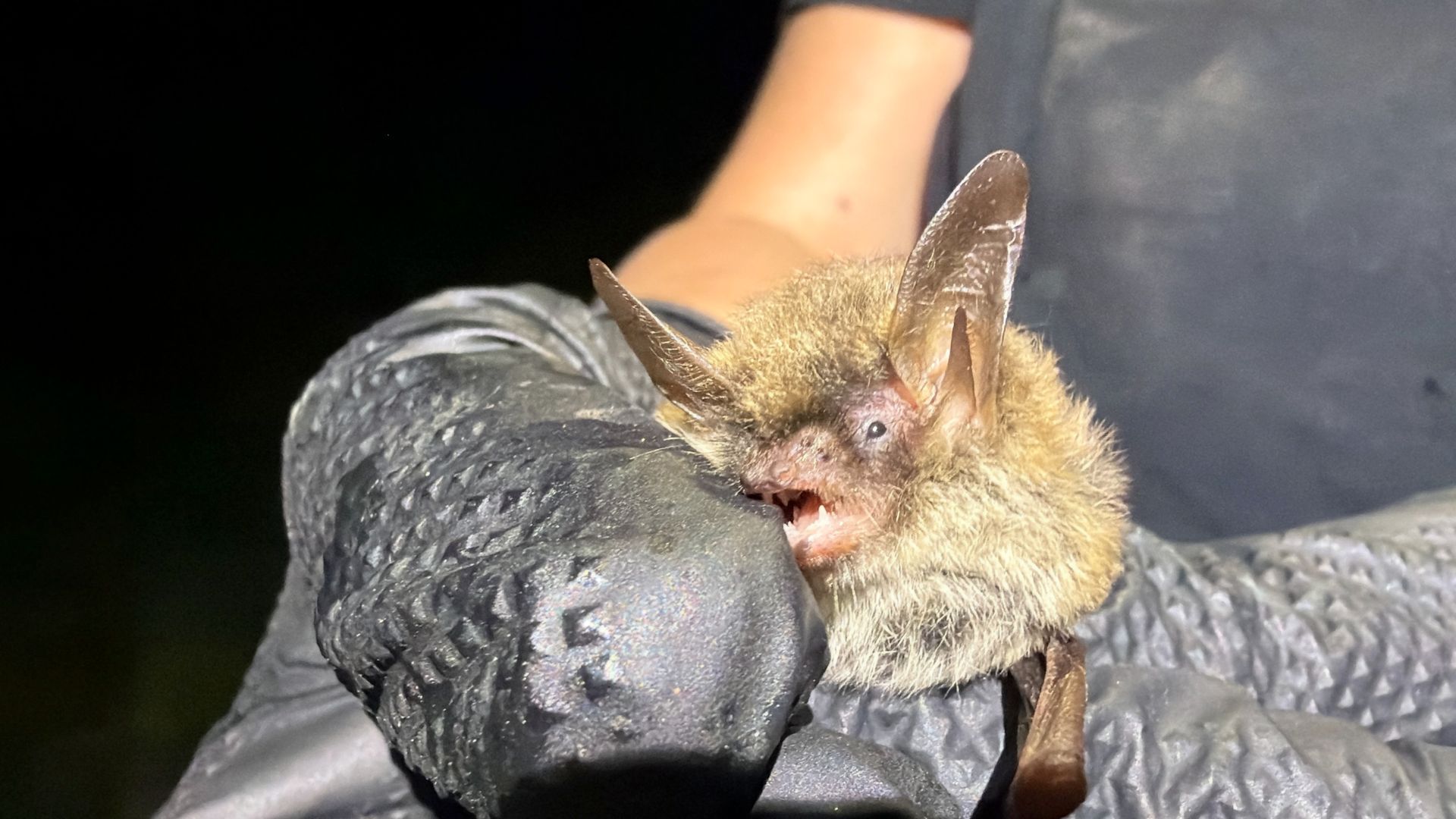
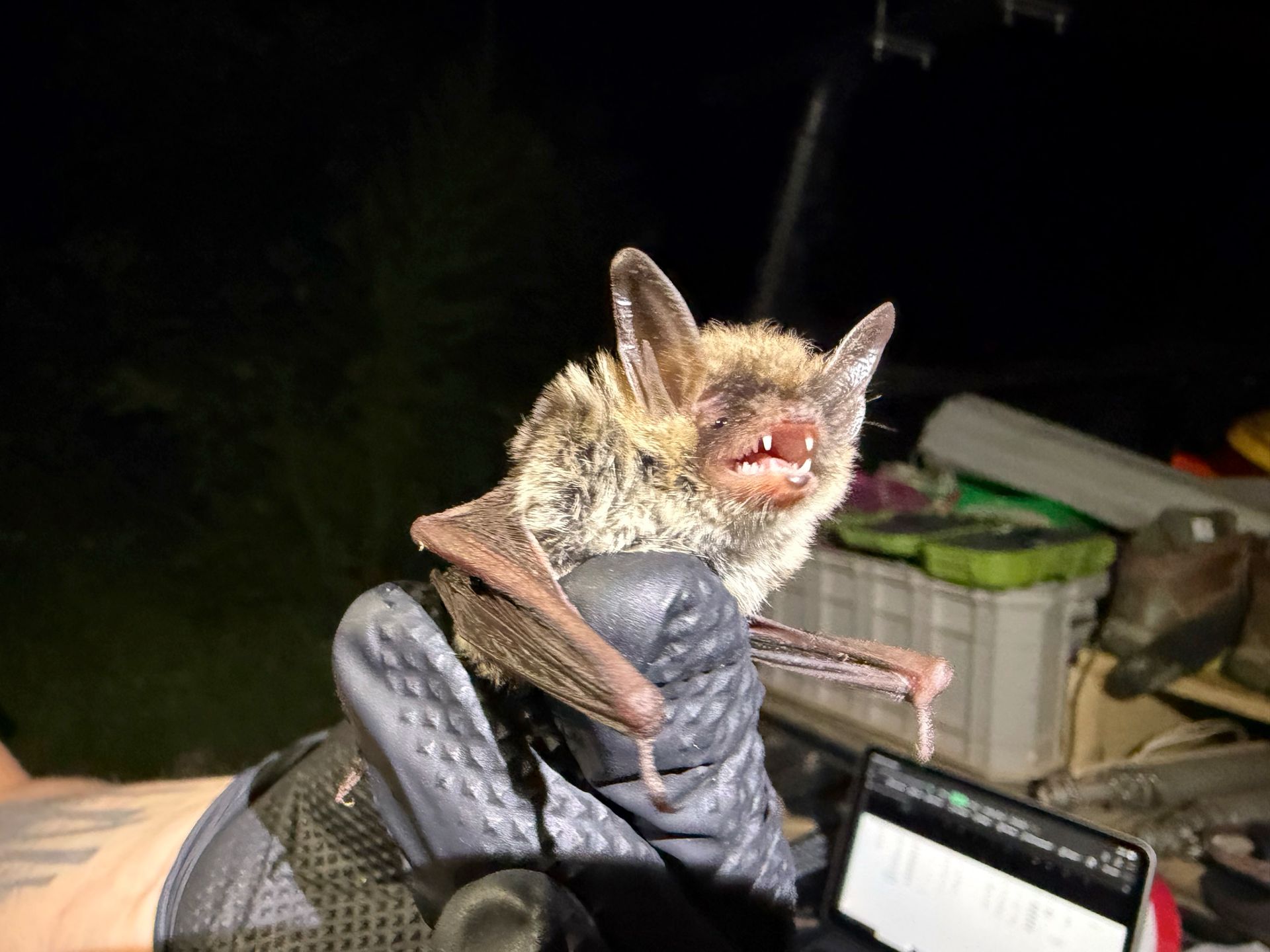
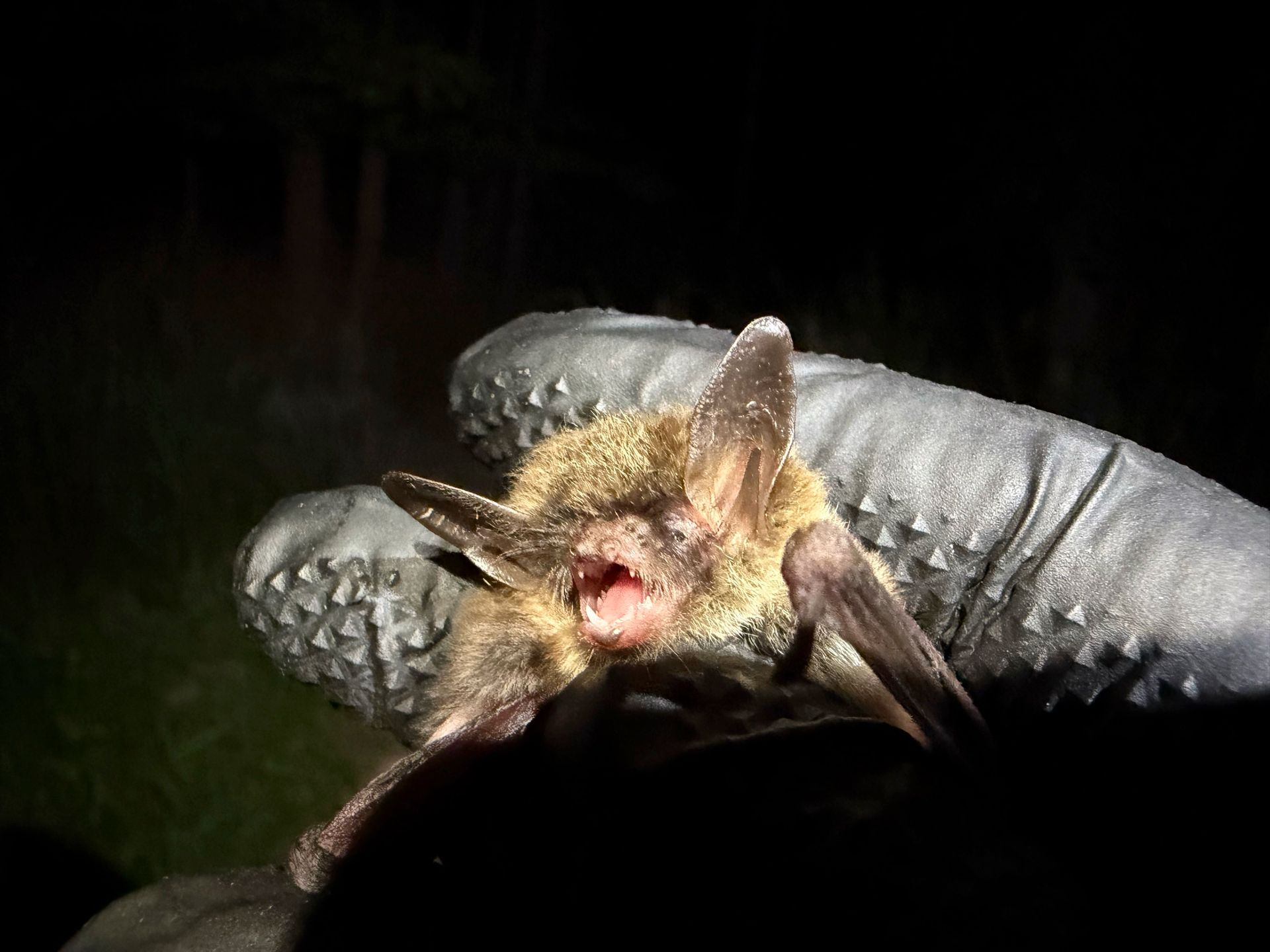
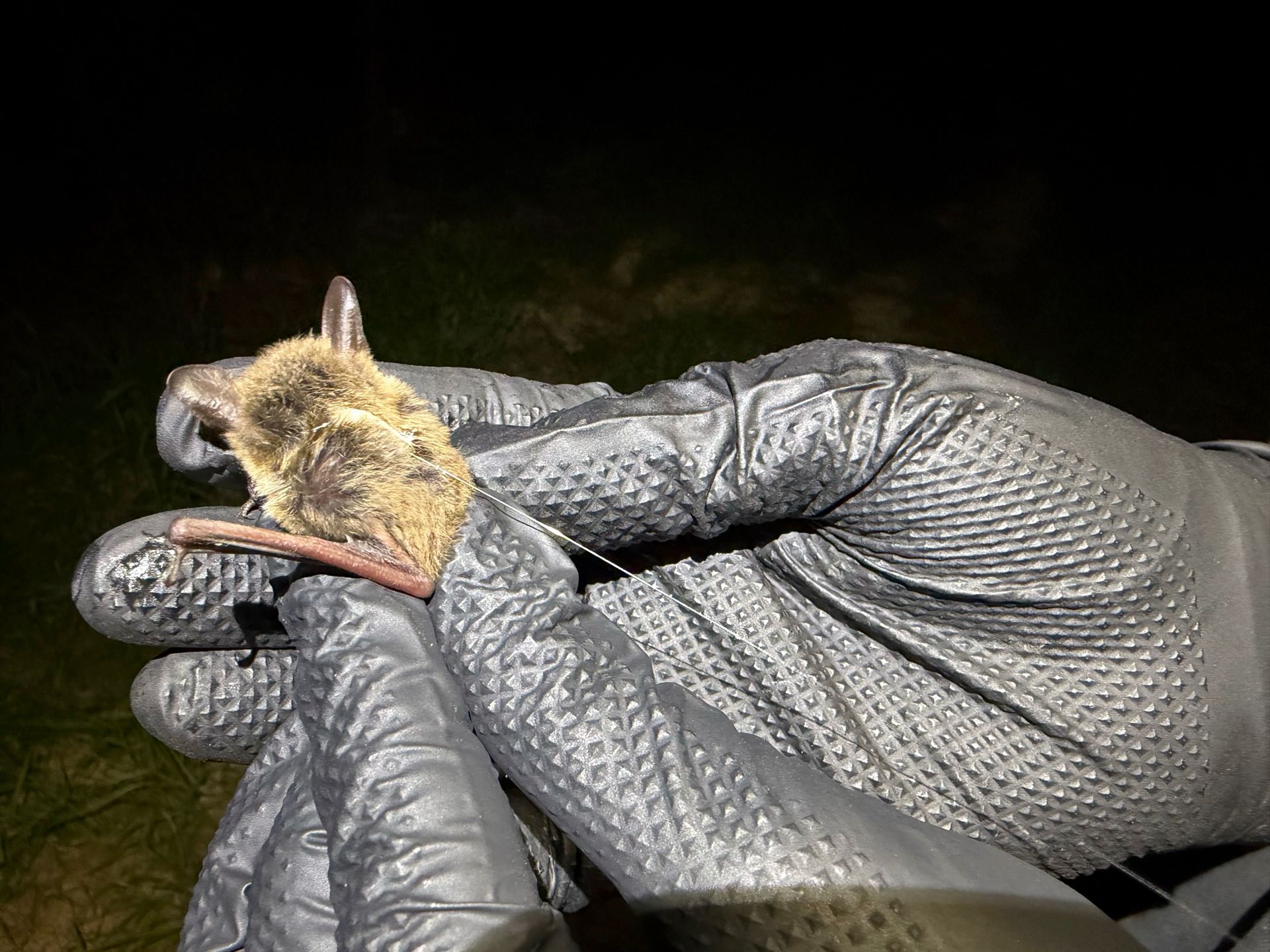
Volant conducted mist-net surveys within the project area and captured a juvenile male northern long-eared bat. Following capture, the crew fitted the bat with a radio transmitter and conducted radio-telemetry tracking to follow the individual across the surrounding landscape.
All work was performed by biologists holding state and federal authorization required to capture and handle federally endangered bats.
A Significant Record
The age and sex of the captured northern long-eared bat carried more weight than a single detection normally would.
A volant juvenile — a young bat capable of flight but recently born — is strong evidence of local reproduction. Juvenile bats are flightless for their first weeks of life and do not disperse far immediately after learning to fly, which means a juvenile captured in an area was almost certainly born within the surrounding landscape. Its presence indicates a maternity colony nearby, not a wandering individual passing through.
That distinction is what made this record significant to the reviewing agencies. According to state and federal agency biologists, this represented the first confirmed northern long-eared bat reproduction in Arkansas following the full onset of white-nose syndrome in the state. The capture occurred within the Coastal Plain ecoregion, and agency biologists indicated it was almost certainly the first record of Myotis septentrionalis in that ecoregion in Arkansas.
Background: The Northern Long-Eared Bat and White-Nose Syndrome
The context for this record is a species in steep decline.
White-nose syndrome is a disease caused by the fungus Pseudogymnoascus destructans, which grows on hibernating bats in the cold, humid conditions of caves and mines. It disrupts hibernation, causing bats to deplete the fat reserves they need to survive winter. First documented in North America in New York in the winter of 2006–2007, the disease has since spread widely and killed millions of bats.
The northern long-eared bat has been among the species hardest hit. Declines exceeding 90 percent have been documented across affected portions of its range. The severity of that collapse drove the species' regulatory status: originally listed as threatened under the Endangered Species Act in 2015, the northern long-eared bat was reclassified as endangered in 2023.
Against that backdrop, confirming reproduction in a state where the species had gone undocumented since white-nose syndrome took hold is a meaningful data point — evidence that a population persists where its status had been uncertain.
The Outcome
The record was reported to the appropriate state and federal agencies, contributing to the body of occurrence data used to understand where the northern long-eared bat persists across its range. For the project, the finding informed the compliance path forward in coordination with the reviewing agencies.
The work reflects what Volant brings to survey support in Arkansas and across the eastern United States: crews capable of capturing, handling, and tracking federally endangered bats under permit, and of recognizing when a capture carries significance beyond a single detection.
Volant EcoServices conducts bat surveys, radio-telemetry, and habitat assessments throughout Arkansas and across the eastern United States, both directly for clients and in support of prime consultants. Contact us to discuss project support.
Related: Bat Surveys · Threatened & Endangered Species