You Missed the Bat Survey Window. Now What?
The summer bat survey season has closed for most of the eastern US. If your project needed a presence/probable absence survey and didn't get one completed, you're now facing a question with real schedule consequences: what are the options, and does this mean waiting until next summer?
Sometimes it does. But often it doesn't — and the difference usually comes down to what your project actually needs, where it's located, and how quickly you start working the problem. Here are the paths that remain open, roughly in the order worth exploring them.
First, Confirm You Actually Need a Survey
Before assuming the worst, it's worth verifying the premise. Not every project that might need a survey ultimately does.
Under the current USFWS Range-wide Survey Guidelines, the process is phased, and it begins with a habitat assessment — an evaluation of whether suitable habitat for the target species is present in the project area. Where no suitable habitat is found, no further presence/probable absence surveys are recommended.
This matters right now because habitat assessments are not restricted to the summer survey window. They evaluate physical habitat characteristics — forest structure, roost trees, snags, potential hibernacula features — rather than detecting active bats. If your project has never had a habitat assessment, that's the first thing to do, and it can be done now.
The outcome is sometimes the best possible one: documentation that suitable habitat isn't present, clearing the project without any summer survey at all. Even when suitable habitat is present, the assessment defines the scope of what you'll need — which is essential for every option below.
Option 1: Clear During the Winter Inactive Season
This is the most common path forward for projects that miss the survey window, and for many it fully resolves the problem.
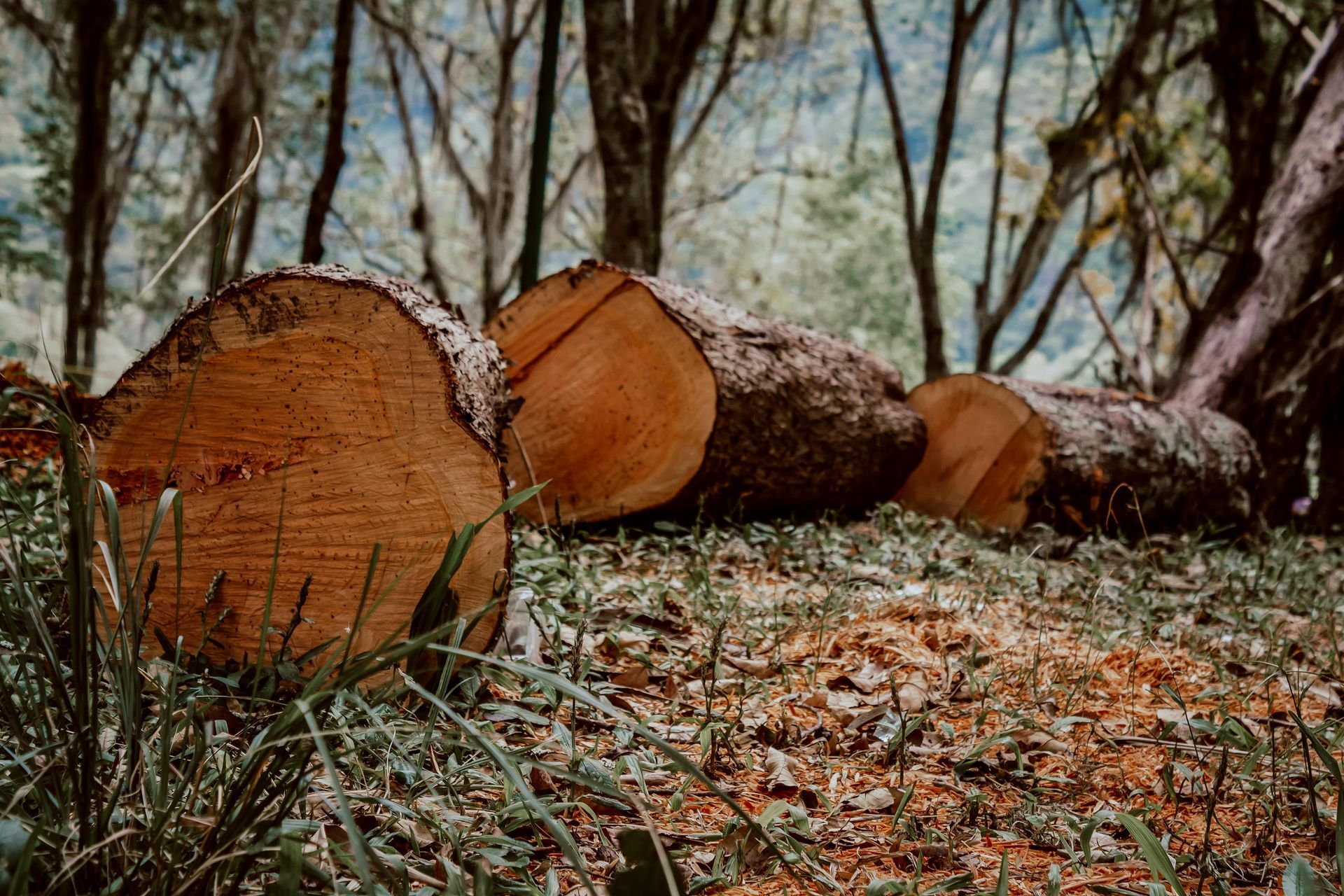
Tree clearing conducted during the winter inactive season — when bats are hibernating in caves and mines rather than roosting in trees — avoids impacts to roosting bats. A project that can complete its clearing within that window may not need a summer presence/probable absence survey at all.
The constraints are worth understanding before you count on this:
- The window is defined and varies. Specific inactive-season dates depend on your location and the relevant USFWS Field Office, and state requirements may apply. Confirm the applicable dates for your project rather than assuming a general rule.
- Your entire clearing footprint has to fit. This is where large projects run into trouble. If the acreage is too large to clear within a single winter, the portion you can't complete still needs a path — often a summer survey next season.
- Proximity to hibernacula matters. Winter clearing near known or potential hibernacula can raise additional concerns, since bats may be present in the surrounding landscape during swarming and staging periods.
- It requires coordination. Winter clearing as an avoidance measure should be confirmed with the appropriate Field Office, not assumed.
If your project's clearing footprint is modest and the schedule can accommodate a winter mobilization, this is usually the fastest route back on track — and the planning needs to start now, not in December.
Option 2: Assume Presence and Proceed to Consultation
A survey isn't the only way to satisfy the regulatory question. A survey establishes whether listed bats are present — but a project can also assume presence and move directly into the compliance process on that basis.
For projects with a federal nexus, that means proceeding to ESA Section 7 consultation with the assumption that listed bats occupy the suitable habitat in the project area. The consultation then focuses on avoiding, minimizing, and where necessary offsetting impacts.
This trades one cost for another. You skip the survey expense and the seasonal wait, but you accept the conservation measures that come with assumed presence — which can include timing restrictions, footprint limits, or compensatory mitigation. For some projects, particularly those where a survey would likely have returned positive anyway, this is a rational and time-saving choice. For others, the measures are more burdensome than surveying would have been.
Whether it makes sense is a project-specific calculation, and it's exactly the kind of question to work through with a biologist and your Field Office before committing.
Option 3: Phase the Project
If part of your project area is the problem, consider whether the project can be split.
Phasing can mean clearing the portions that fit within the winter window now and deferring the rest, advancing work in areas without suitable habitat while surveying the areas that have it, or sequencing construction so that survey-dependent work happens after next season's results are in.
This won't fit every project, and it can carry its own costs in mobilization and scheduling. But for large sites — where the whole footprint was never going to clear in one winter anyway — phasing often turns a total delay into a partial one.
Option 4: Check Whether a Programmatic Framework Applies
For certain project types, particularly transportation, USFWS and federal agencies have established programmatic frameworks that standardize how bat impacts are addressed. Where a project qualifies, these can streamline the path considerably compared with a case-by-case process.
If your project might fall under one and you haven't checked, it's worth confirming now — it may change the analysis entirely.
Option 5: Plan for Next Season — Properly This Time
If none of the above fits, next season is the answer — and the way to make that sting less is to use the intervening months well rather than waiting.
A few things worth doing between now and spring:
- Complete the habitat assessment if you haven't, so next season's survey scope is defined rather than guessed.
- Submit the study plan early. A survey study plan must be approved by the USFWS Field Office before fieldwork begins, and for complex projects requiring coordination across multiple Field Offices the guidelines indicate approval can take on the order of 45 to 60 days.
- Book survey capacity. Qualified, federally permitted crews are finite, and demand concentrates in the same narrow window. Early commitments get scheduled first.
- Know your window. The summer season runs May 15 through August 15 in the hibernating range, while the year-round active season for northern long-eared bat and tricolored bat runs March 1 through October 15 in the portion of their range designated year-round active. Some states set narrower windows.
Missing a season once is common. Missing it twice, for the same avoidable reason, is what turns a delay into a pattern.
The One Thing Not to Do
There's a tempting option that isn't an option: proceeding with clearing and hoping the question doesn't come up.
Under Section 9 of the Endangered Species Act, it is unlawful to "take" a listed species — a prohibition that includes harming individuals. It applies to private parties on private land, not only to federally funded projects. Unpermitted clearing that harms listed bats can constitute unlawful take regardless of whether anyone was watching.
The cost of a compliance failure — enforcement, project shutdown, remediation — reliably exceeds the cost of any of the options above.
The Bottom Line
Missing the survey window is a setback, not necessarily a lost year. The projects that recover fastest are the ones that start working the problem in August and September, when winter clearing can still be planned, habitat assessments can still be completed, and next season's study plan can still be submitted early. The projects that lose the most are the ones that wait until spring to find out what their options were.
If your project is in this position, a short conversation about your site, footprint, and schedule will usually clarify which of these paths is realistic.
Volant EcoServices helps project proponents across the eastern United States assess habitat, plan survey timing, and coordinate with USFWS Field Offices. Our bat biologists hold active USFWS Section 10(a)(1)(A) recovery permits.
Related: When Can Bat Surveys Be Done? · What Happens If Bats Are Found on My Project? · How Much Does a Bat Survey Cost? · Bat Surveys · Planning Winter Tree Clearing: What the Guidelines Say
This article is general information, not legal or regulatory advice. Options vary by project, location, and jurisdiction; confirm requirements with your USFWS Field Office or a qualified biologist.